Southern Alps
Ski
The Southern Alps on the South Island of New Zealand are the main hub for alpine sports in New Zealand, home to a deep tradition of alpinism that has produced many pioneers of the sport. In other countries where mountaineers are considered outsiders and on the fringes, they are unanimously welcomed here, to the extent that the five dollar note has Sir Edmund Hillary on it.
The mountain range runs for around 500 kilometres down the island’s spine and is home to the country’s highest and most rugged peaks, which are heavily glaciated and weather-patterned. This creates a dynamic ski and mountaineering environment with huge quantities of character and technical difficulty. There are five main commercial ski ‘resorts’ - the Remarkables, Coronet Peak, Treble Cone, Cardrona and Coronet Peak, alongside around 15, locally run ski fields, affectionately known locally as club fields, or clubbies.
The Southern Alps are home to the tallest peak in the country, Mount Cook, at 3754 metres, which stands tall and is easily distinguishable amongst its neighbours, despite there being 19 peaks in total over 3000 metres. Mount Cook, which separates the east and west coasts, and can be seen from both shorelines and is of great cultural importance to Māori, who originally named the peak Aoraki, meaning Sky or Cloud Piercer. Subsequently renamed by European settlers, particularly the British navigator Captain James Cook, the surrounding national park was named after the Brit, forming Aoraki Mount Cook National Park.
Areas to the north and south of Mount Cook are popular for ski mountaineering and offer a variety of terrain and opportunities to find good snow and challenging terrain. As these climbing and ski missions have developed, the peaks of the Southern Alps have become the solid training ground for locals and visitors in preparation for heading off to the world's major mountain ranges. You’re at the mercy of some serious weather, but when conditions and timing align, some very special places can be accessed and skied.
15 Sep 2024
The timing of my move from the UK to NZ meant I enjoyed back to back summers, however, the consequence of this meant I skipped the Northern Hemisphere ‘23/’24 winter and so haven’t skied for roughly 16 months. This would be my first time skiing in the Southern Hemisphere, and outside of Europe for that matter. Keen to make up for lost time on snow, I headed south from Wellington on a two-week, two-phase trip to the heart of the Southern Alps.
First, heading to Lake Tekapo, I’d meet a group in Edelweiss Lodge which is the base for local outfitter Alpine Recreation. After spending five days in the Cass Valley, my original plan was to then move on to the Caroline Hut, located in some serious terrain and some very cool lines. However, the weather closed in on the changeover days and so access to the Caroline Hut to our west was not possible. Deliberating options for some time and trying to make the best of the weather on offer, we opted for a flexible approach to each day, moving our base to Queenstown in the Southern Lakes area where would could access appropriate terrain given conditions and chase the sun and fresh snow each day. This was a lot more work, but in the end it worked out very well and between these two parts of the trip I learnt fast how skiing and weather works in New Zealand. TLDR - very changeable and every kind of snow imaginable in roughly 100 metres! Here’s how it played out.
Cass Valley
Ten or so days ago I was concerned there’d be very little snow around and we’d have some trouble skiing, however, the week leading up to my trip was filled with snowfall each night, with half a metre or so of snow falling several nights in a row. So now, the issue of potentially too much snow and dangerous conditions would be a concern. Probably the preferred way around, though.
Our relatively straightforward access to Lady Emily hut, which sits at 1500 metres, began with passing through Glenmore Station, a huge cattle and sheep station in the Gamack Range. We loaded up a Land Cruiser, first driving through the Cass River riverbed following 4×4 tracks, before leaving the vehicle in the valley and hiking through the tussocks of the lower slopes before the welcome move to skis as we progressed above the snow line.
Close to the Main Divide, the Cass Valley is snow sure and expansive, offering easy access to wide-ranging terrain. The recent pattern of fresh, late season snowfall from last week would continue, and we’d get top-ups each night, with high pressure during the days, so the group vibes were high and we were all ready to get stuck in.


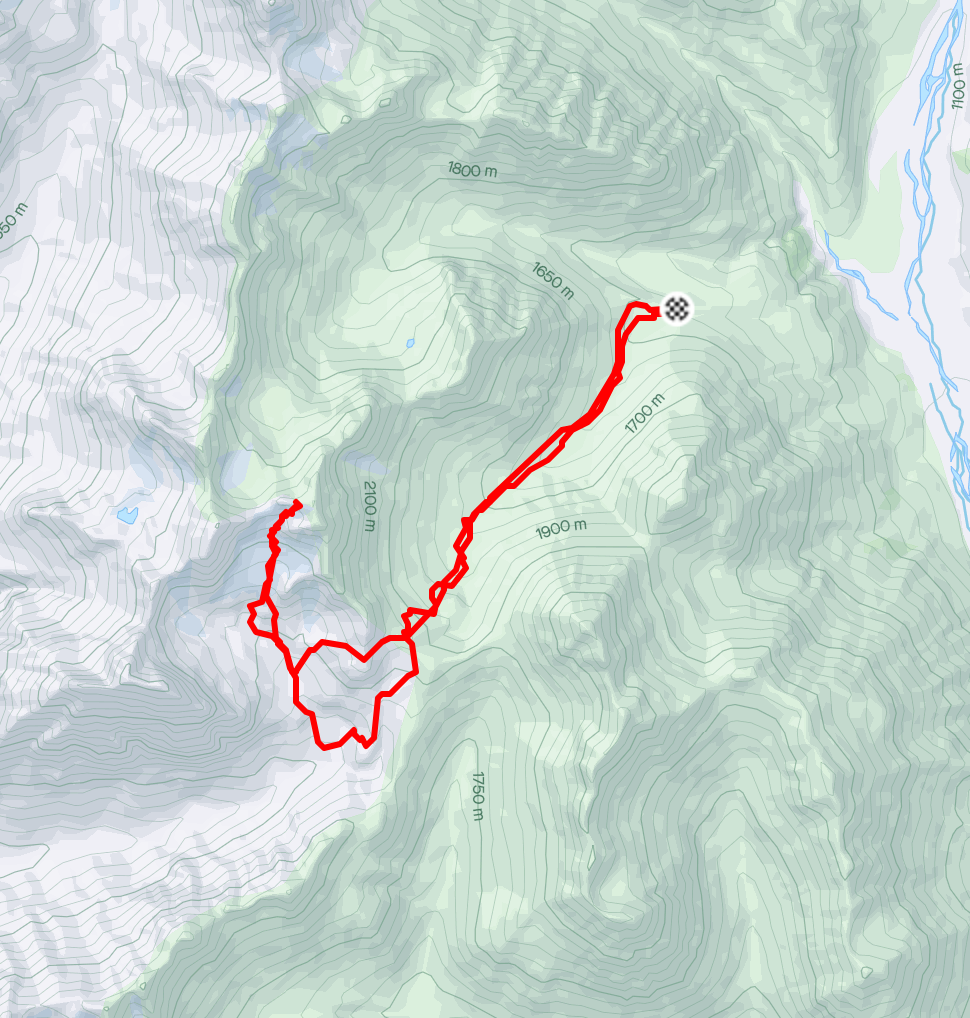
Day 1: 14 km | 1330 m+ | 4/8.5 hours
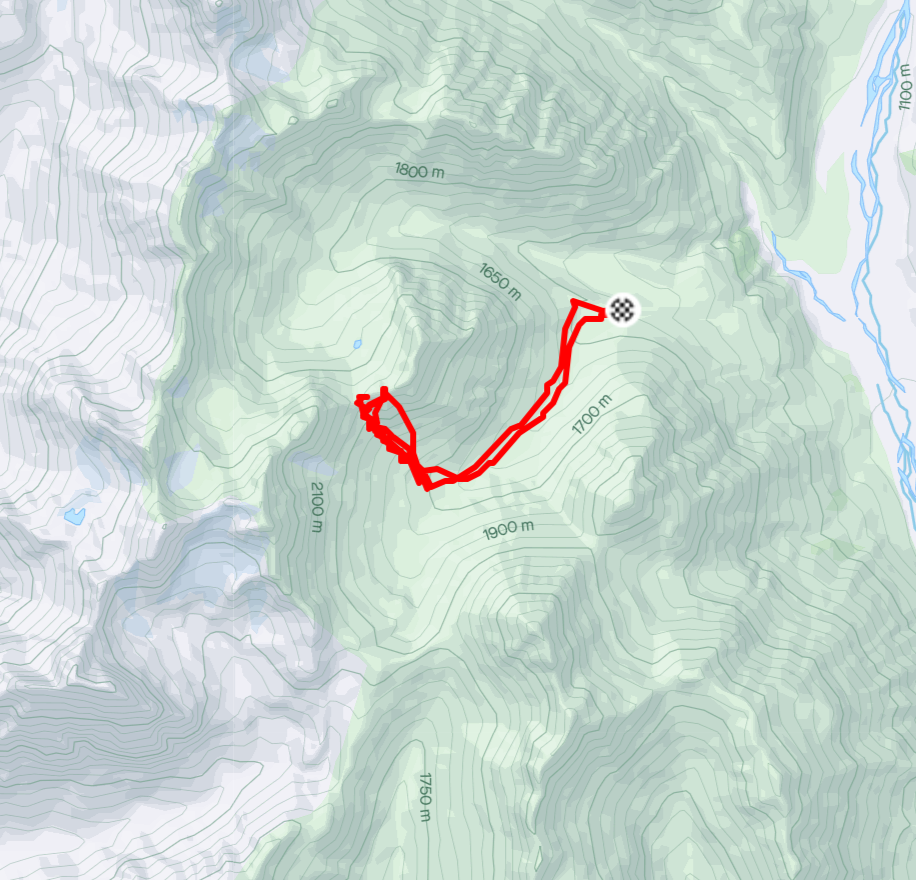
Day 2: 13 km | 1470 m+ | 4/7.5 hours
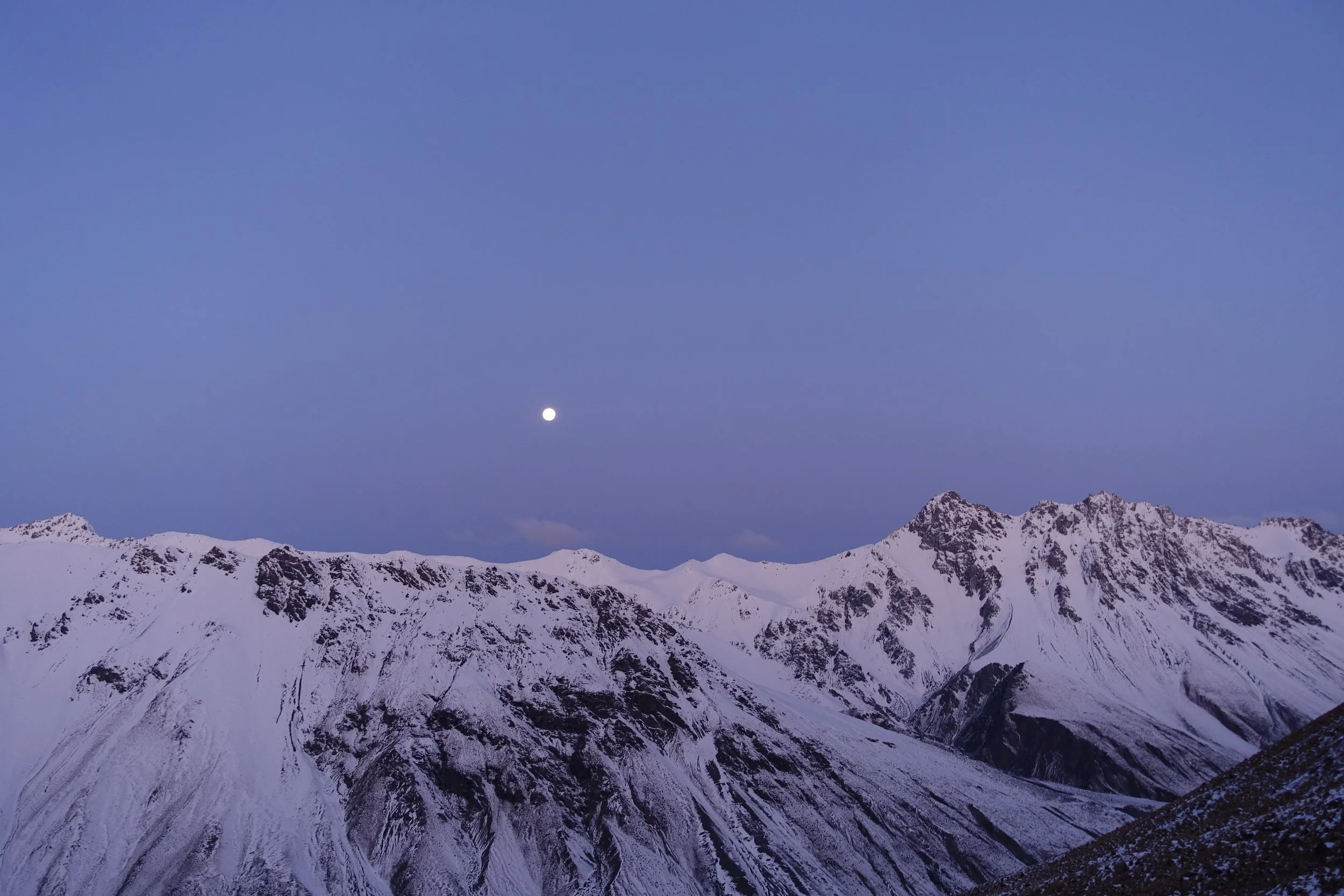
Fresh overnight snowfall and clear blue skies is the best way to start any ski trip, and the bonus cloud inversion in the valley made it feel like I’d woken up much further from civilisation than we were, the cloud enveloping the vehicle in the valley and path we’d travelled up from.
We were a group of four and had the hut to ourselves for the first few nights and it was pretty tight still. The numbers would swell to ten in the hut and two in a tent outside in a couple of days, but for now I enjoyed the cold crisp air and peace of the valley.
We skinned away from the hut at 8.30am, heading up the valley for rough three and a half kilometres and 600 metres of climbing to Bad Decision hut. This self proclaimed ‘highest whiskey bar in the world’ is home to a huge number of bottle of whiskey, flown up once preordered from a shop in Christchurch. Locals would tour up and enjoy a dram whilst pit-stopping. I was excited to see it for myself.
Gentle gradient allowed me to find my ski legs at my own pace, adding in a couple of kick turns to bring the muscle memory back. We kept the day simple and dropped off the back of the hut, returning and then ascending a flanking slope to access a wide bowl for a few short-ish runs. The snow was deep and temperatures cold, it was an ideal way to start. My only concern was my slim touring skis not have the width underfoot for the conditions, but I made it work.
Waking on our second day to 20cm of fresh and another day of blue skies was too good to be true. The day’s skiing would start as it would every day when heading out from Lady Emily, heading straight up the Cass Valley to the Bad Decision hut.
The goal for the day was the Scorpion, a long, curling run around the back of the slopes of the Cass that we’d skinned up.
Our guide for this trip was Vindy, a Kiwi ski guide and local, and he definitely had his work cut out putting in the skin track for us this week! Snow started falling as we ascended and the weather closed in, but we continued, reaching the top at 15.00, making it a two hour skin.
The final few hundred metres to the top of Scorpion were deep and steep, and all of us in the group, Vindy, John the American, plus Jordan, a Kiwi from Christchurch, were all pretty ecstatic about the run we were about to get.
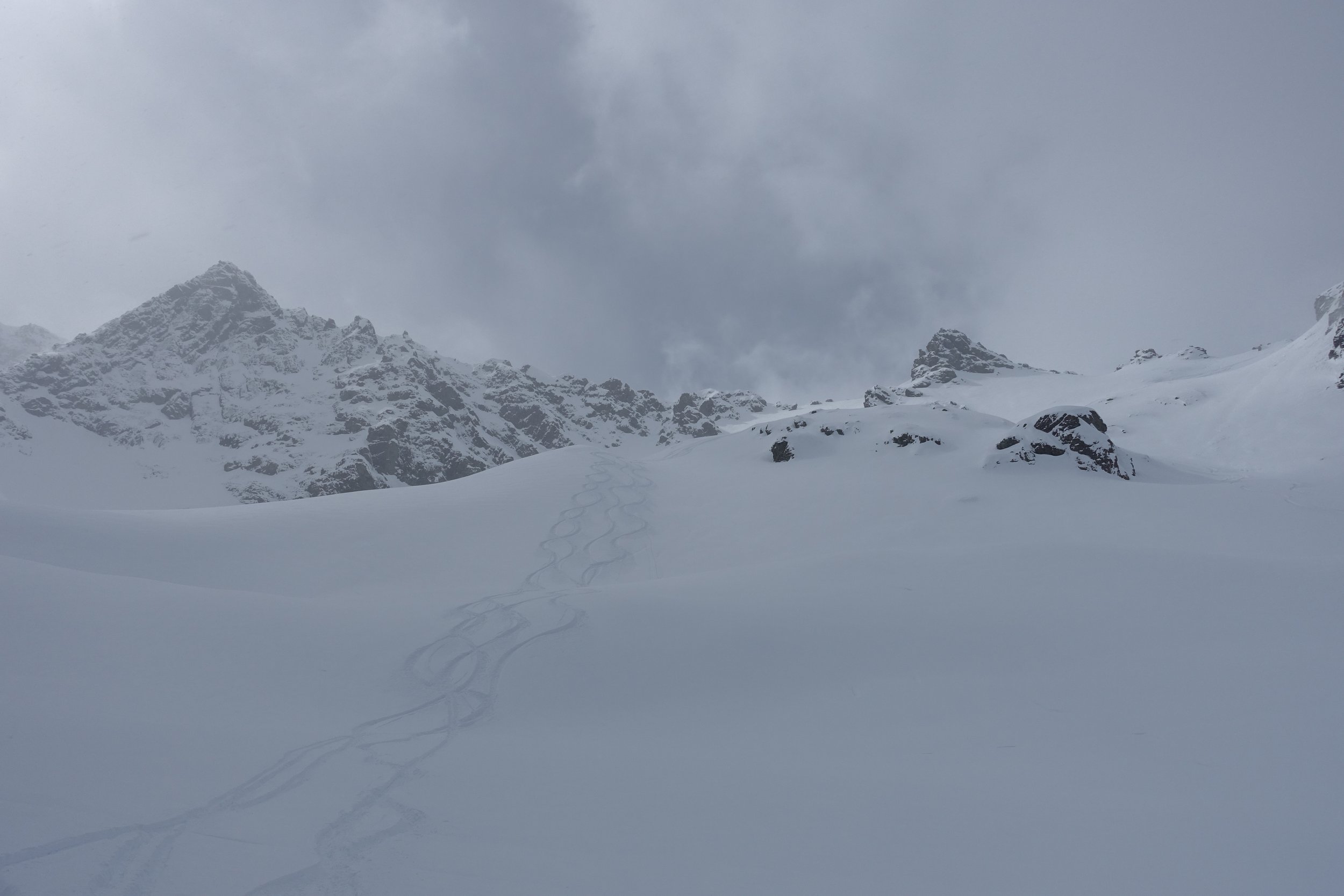
We hovered at the top for a weather window, hoping the wind would blow some cloud out and let the sun provide us with better visibility for a few minute for our trip back down. We made the best of the light available and I wooped my way down the Scorpion, in pow around knee deep.
The transition to skin back to Bad Decision hut was different this time around, we all grinned ear to ear and knew that run would be hard to beat over the next few days. We celebrated with a wee dram and skied back down to Lady Emily to meet the group who’d be joining us for the next few nights in the hut.




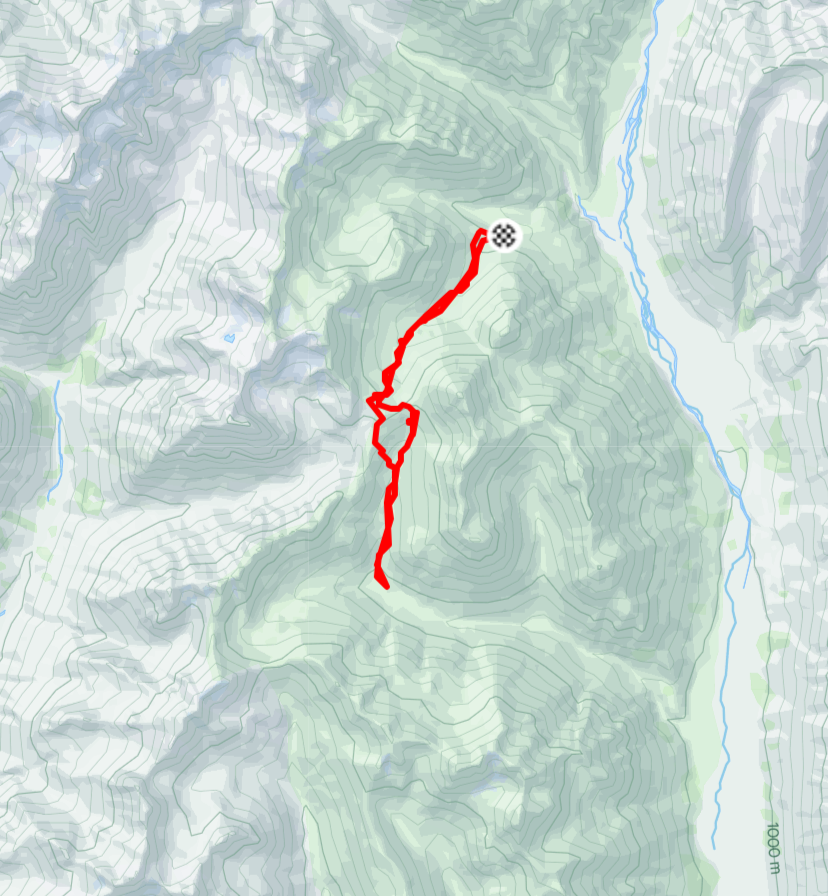
Day 3: 11 km | 1490 m+ | 3.5/7 hours
Day 4: 0 km | 0 m+ | 0 hours
Day 5: 14 km | 1300 m+ | 3.5/6.5 hours
The hut was bustling and frantic with so many bodies moving in such a confined space, all eager to get back out on snow. The hut had two rooms, labelled north and south ‘wing’, roughly measuring three metres by four metres. Prepping breakfast and lunch with ski kit hanging from the ceiling, boots drying near the fire was initially frantic, although everyone was organised and we got out at 08.30 again. This time though, the temps were noticeably warmer and I skinned in just a base layer from the off.
Today, instead of heading all the way up the valley to Bad Decision, we’d peel off to our right three-quarters of the way up, heading west to the top of Super Bowl. We spent the whole day here, with three variations on the face before calling it a day. We had very windy transitions at the top but coming down in a big, wide open bowl was good fun. The snow wasn’t as deep as yesterday but three laps in we discussed how somehow, this potentially topped yesterday’s Scorpion run.
The shorter trip home was much appreciated and we had a longer evening to chill and hang out in the hut, although tomorrow’s forecast wasn’t offering us much chances of skiing. The larger group had moved on and we were now joined but a group of three, including an English couple who’d also recently relocated to New Zealand.
Overnight was calm but from 07.00 the winds picked up and stayed up all day, peaking at 80-90 kph. We didn’t leave the hut and spent the day eating drink tea, eating cheese and crackers, chatting about avalanches and playing Exploding Kittens (a card game). The wind howled at the hut and we all knew it wasn’t an option of whether to head out or not. We’d have to make up for it tomorrow.
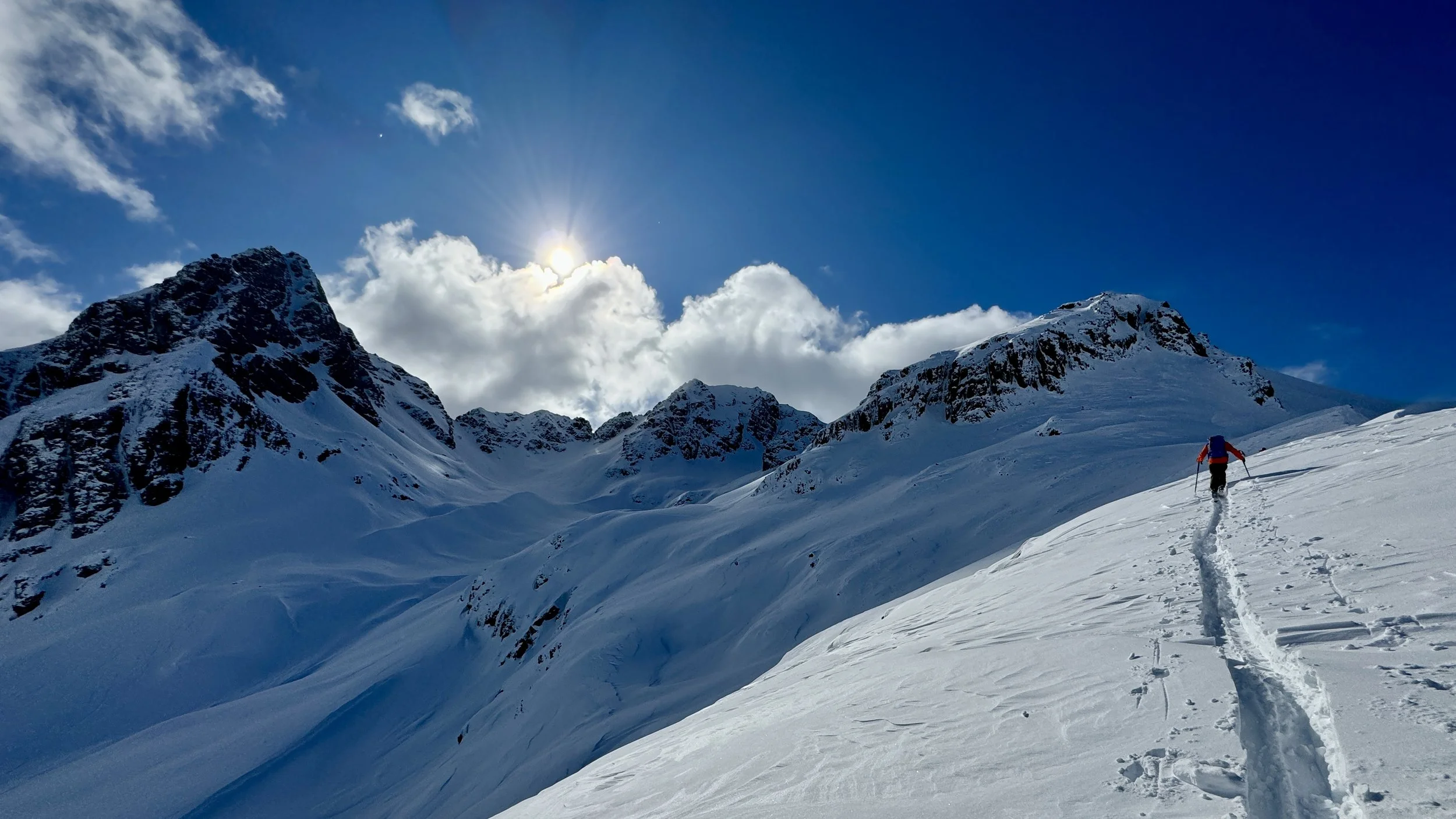
Our final day in the Cass Valley saw us head up and down to the Falcons Nest hut. We pit stopped for a coffee in the sun, before heading back to Lady Emily and then down to the vehicle to drive out. It was a scorching day and the snow felt more spring like and appropriate for September in the Southern Alps.
Rest of group photos




Southern Lakes
The mountains surrounding Wanaka and Queenstown are often referred to as the Southern Lakes region, where there’s three major lakes in relative close proximity - Lake Wanaka, Lake Hawea and Lake Wakatipu, and all of which sits inside the South West New Zealand World Heritage Area. This is where you’ll find the majority of the large, commercial ski fields in New Zealand, mainly Treble Cone, Cardrona and the Remarkables.
Having driven out of the Cass Valley and reconfigured in Lake Takepo, and swapped guides, we decided to head south in search of small weather windows that would allow us to access some quality snow and terrain. We traded the hut we’d booked for an apartment just outside Queenstown and planned to take a flexible approach to each day. I’ll have to come back another year for Caroline hut!
As a lot of snow had fallen over the last week or so, the avalanche risk was high and plans were touch and go. Our guide for this part of the trip was Didac, a Spanish guide who spends his northern hemisphere winters in Switzerland. He planned to take us to the freeride terrain in and around the ski fields, using a ski lift bump first thing if needed, and make use of the added safety advice and local knowledge of the ski patrol.
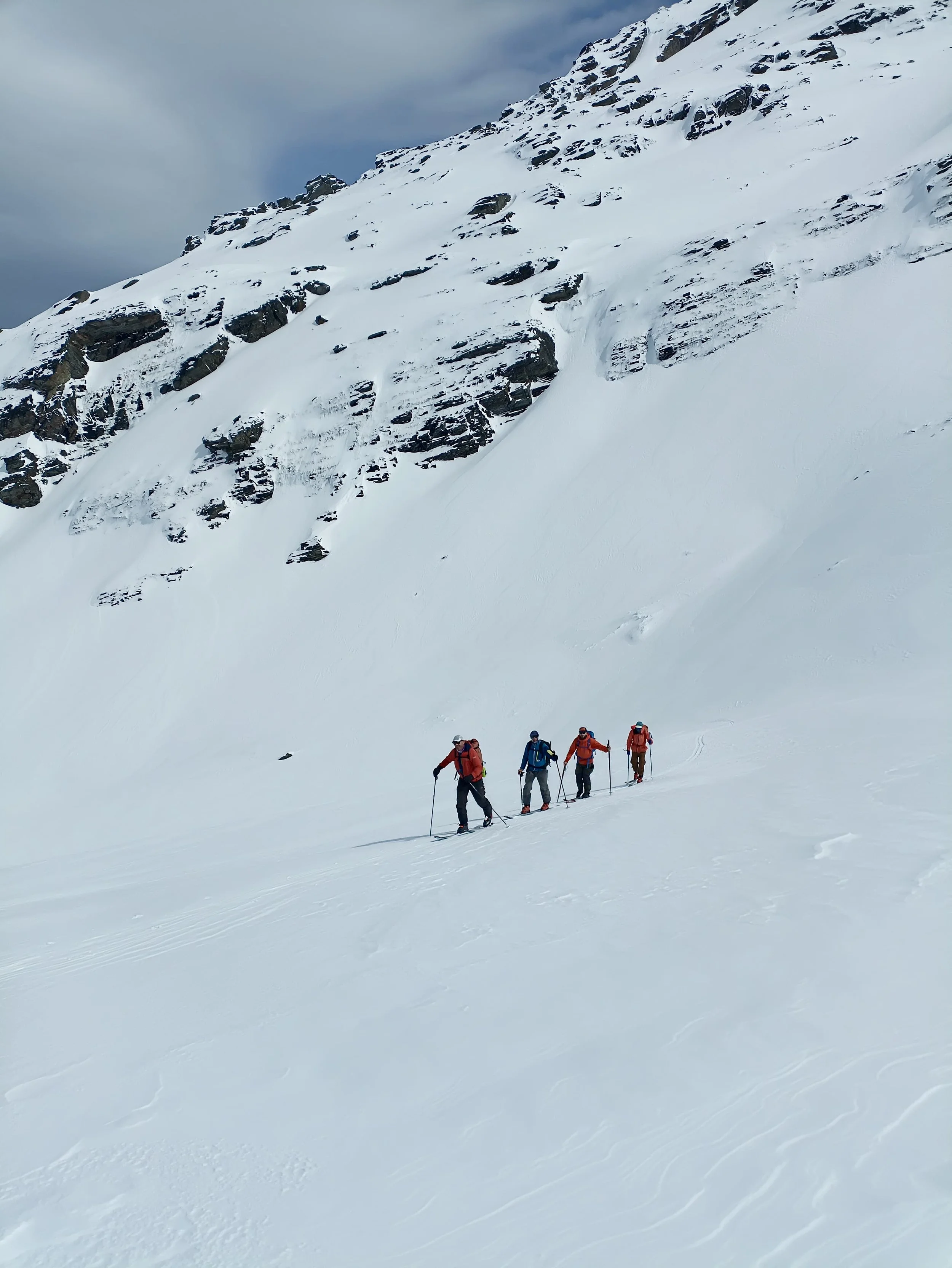
We ended up with two days off the back of the Remarkables, a day in Treble Cone, then another final day back in the Remarks. Due to the snowfall, subsequent increased risk and given it was late in the season, we skied some incredible lines with very few other people around. The days were shorter as we had some driving to get to each ski destination each morning, but the runs were punchy and snow was very good indeed.
Rest of group photos


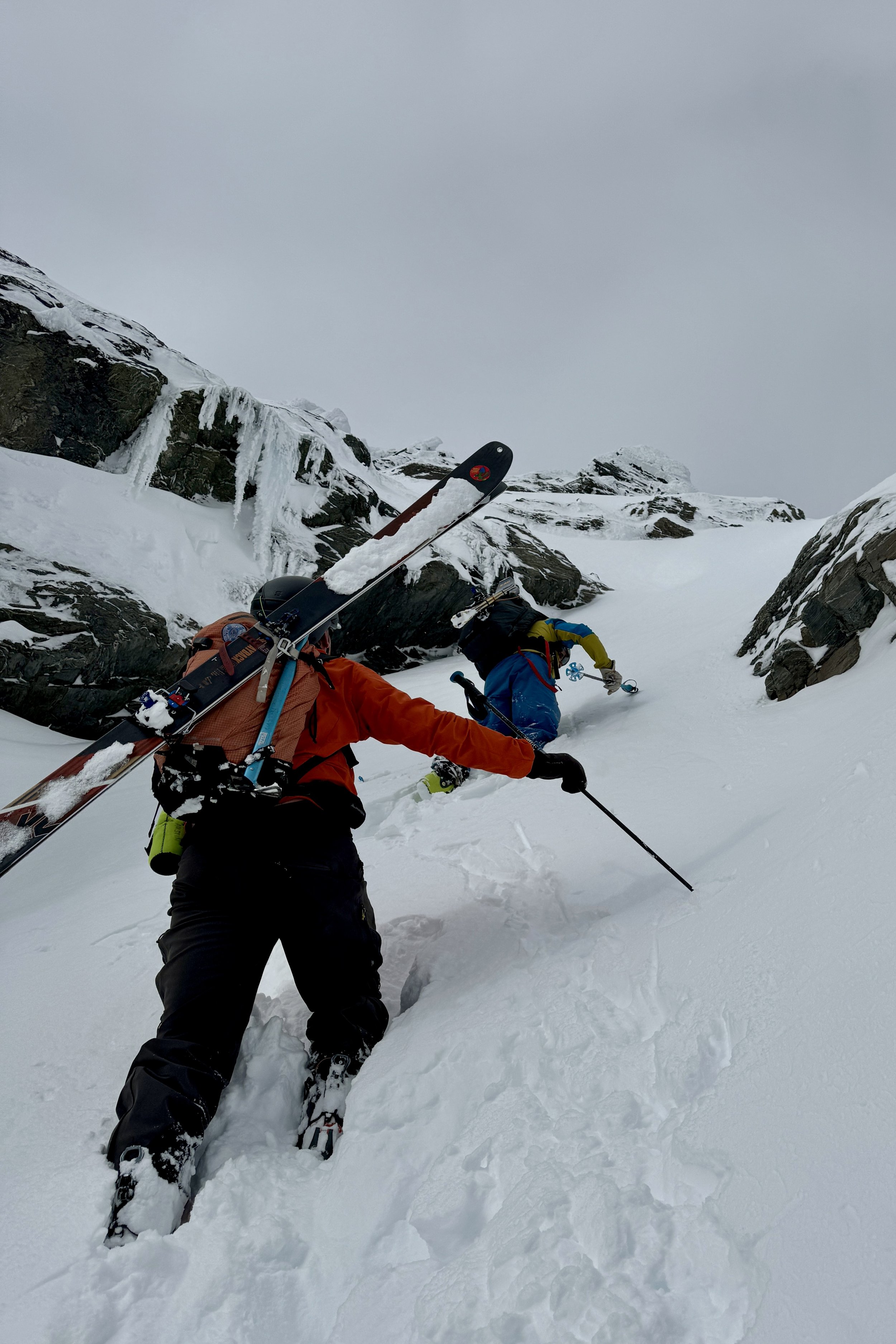
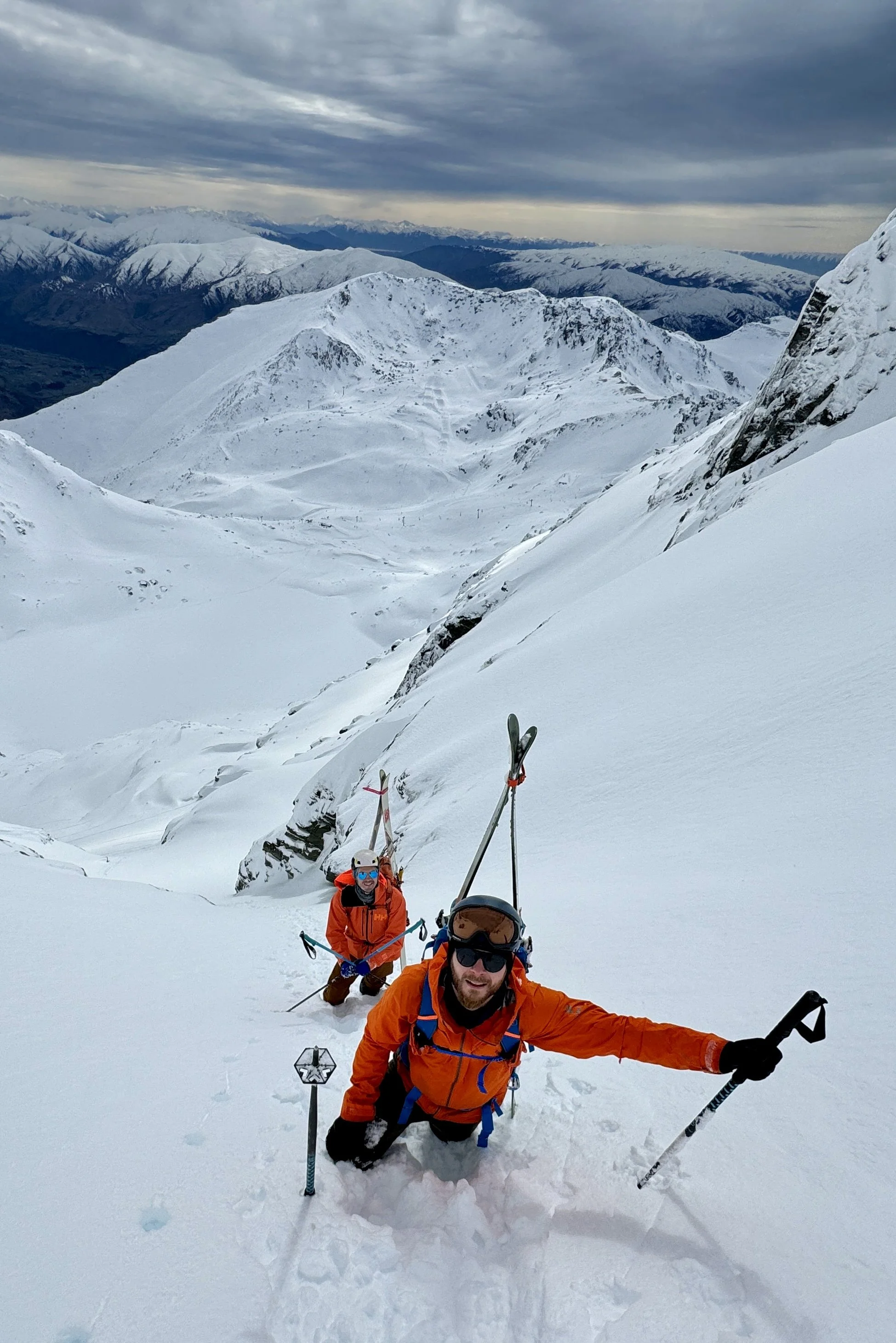
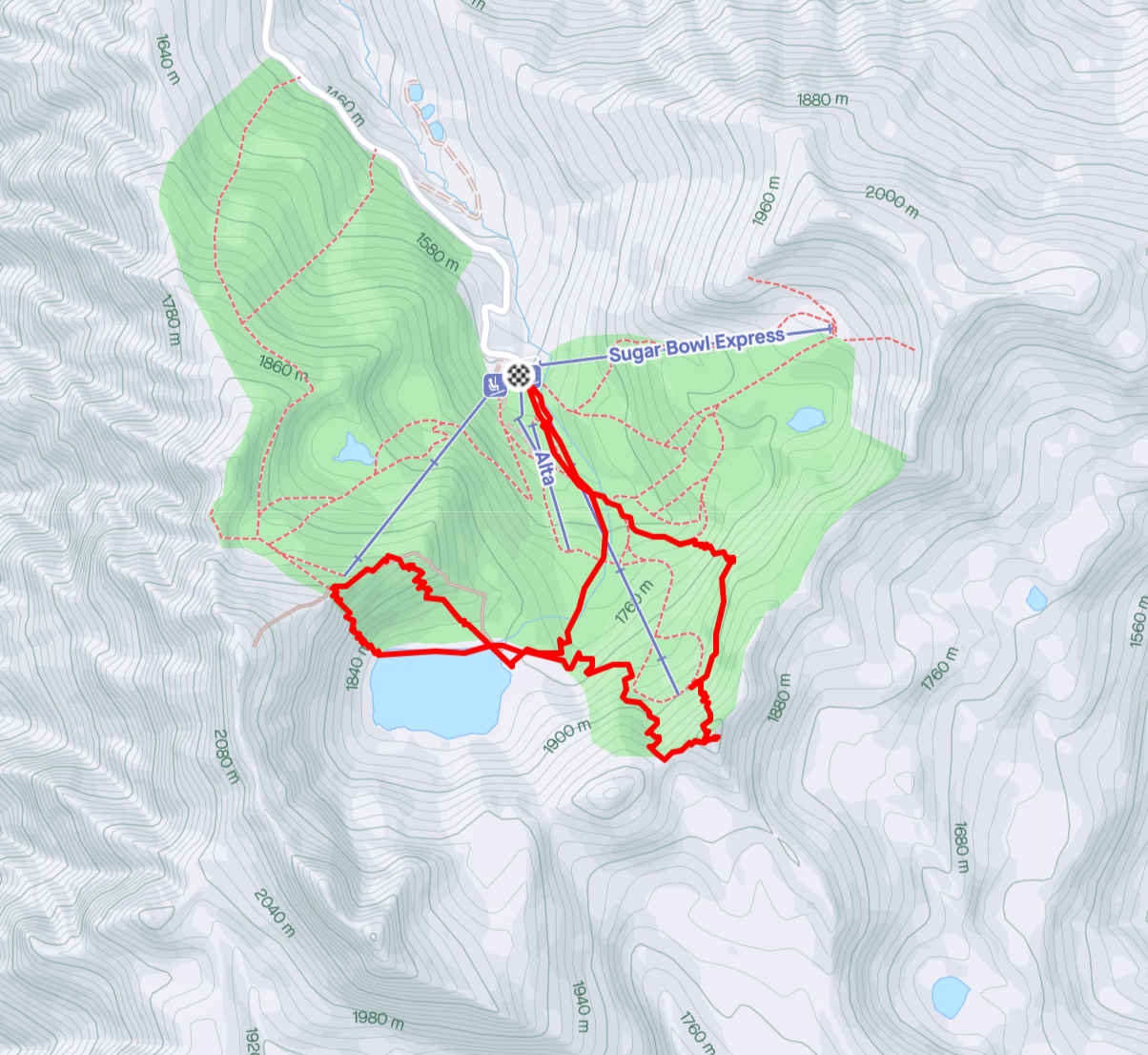
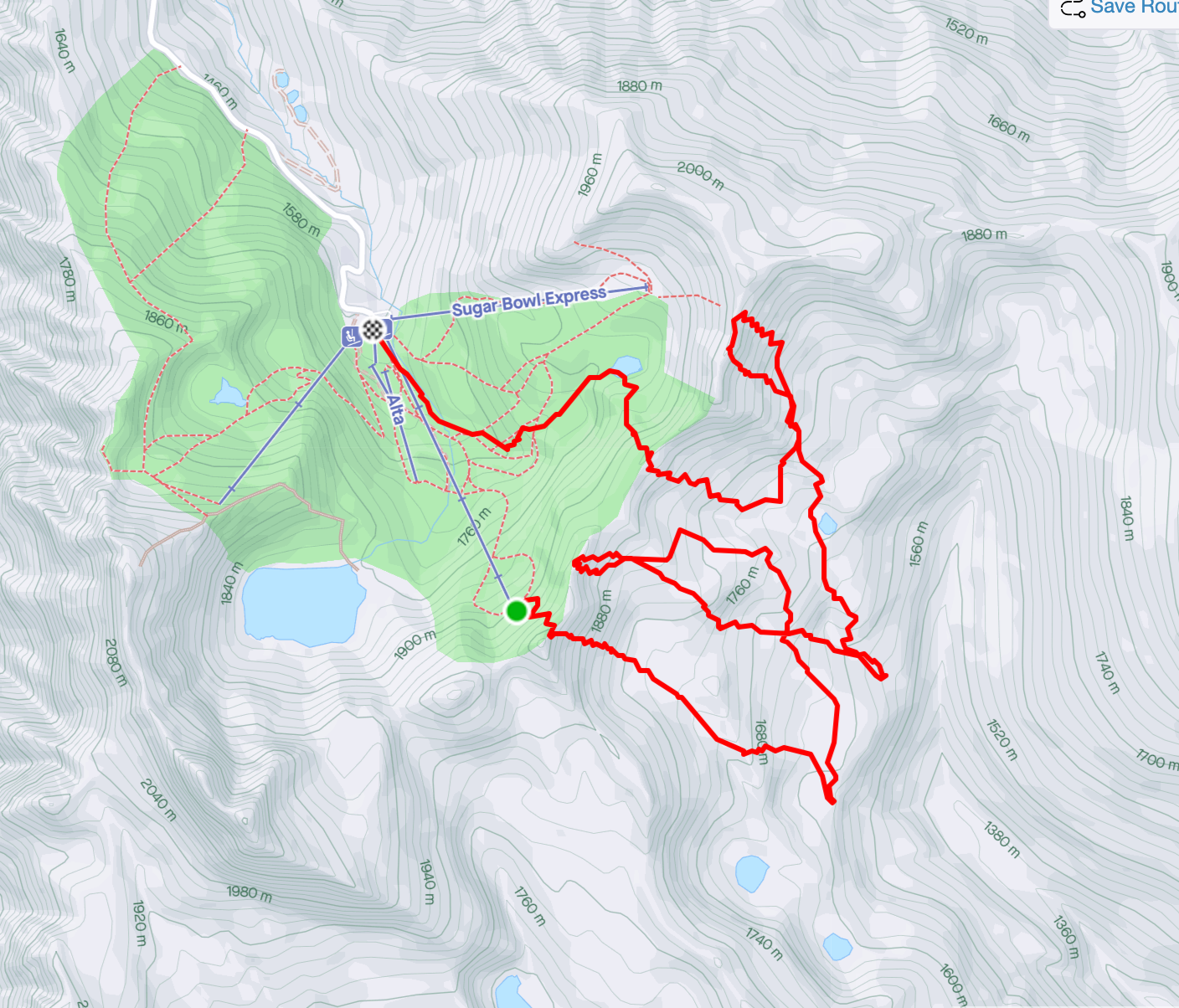
Day 1: Remarkables. 7 km | 700 m+ | 2/4 hours
Day 2: Remarkables. 12 km | 1220 m+ | 2.5/5.5 hours
I love the adventure of staying in remote huts, but the contrast from staying in the Lady Emily hut, with no running water, a long drop toilet, a stove for heating and bunkbeds, to a newly built house was admittedly really quite nice. We headed off to the Remarkables resort for what looked like a day of patchy weather. We skinned up the lower pistes and traversed over to ski Shadow Basin above Lake Alta. The weather was pretty windy and not much visibility, but there were other skiers around as a lift could take you to the couloir we planned to ski. The colour was steep and fun to ski, so was worth the poor conditions. Two runs down couloirs above Curvey Basin followed before we called it a day.
The follow day we came back, taking one chair lift ride up from the base to Curvy basin again, this time dropping off the back of the resort into the Doolans area. We skied this all day, skiing lines down until the terrain mellowed, then turning around and heading back up to repeat. We saw two other tourers on this side all day! The weather was good and fun lines with many possibilities.
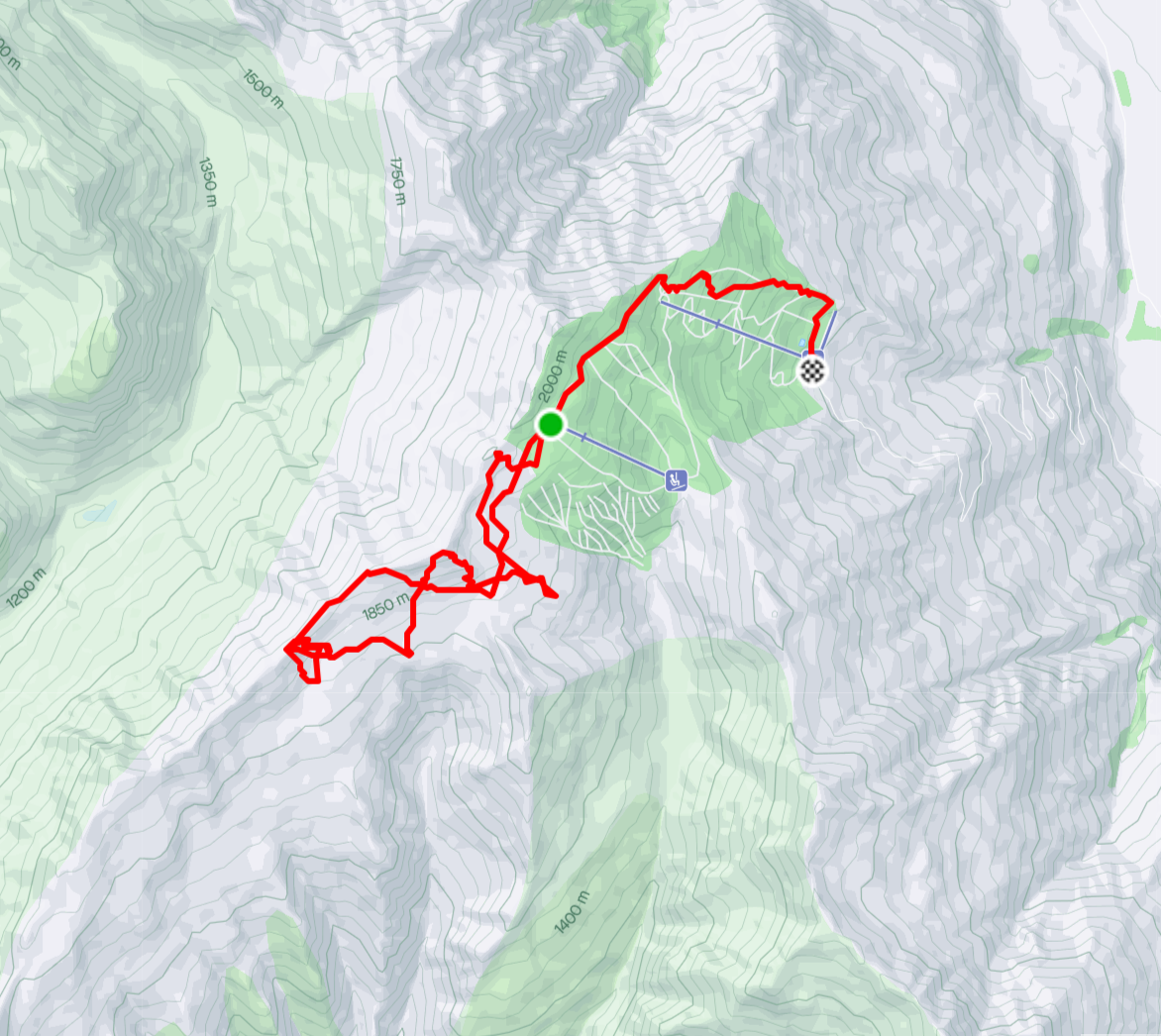
Day 3: Treble Cone. 14 km | 980 m+ | 2.5/5.5 hours
Driving further afield to Wanaka to ski Treble Cone, the resort overlooks Lake Wanaka and the scenes are unreal. Several times I thought to myself the views of the lake below didn’t quite feel real. We had a delayed start due to avalanche clearing, where we drank coffee in the shelter of the cafe and I stared out the window to the valley and lake below, but the wait was definitely worth it.
There’s a huge number of feature-filled tight chutes and gullies, wide faces, spines and drops to be had. Wind was high all day so we had moments of pausing after transitioning and being ready to ski down where we waited out a calm spell. We squeezed five runs in, albeit shorter but punchier too, and due to the increased avalanche danger there was no one else around. The lower key, less commercial vibe here I really liked, and I’m keen to come back.
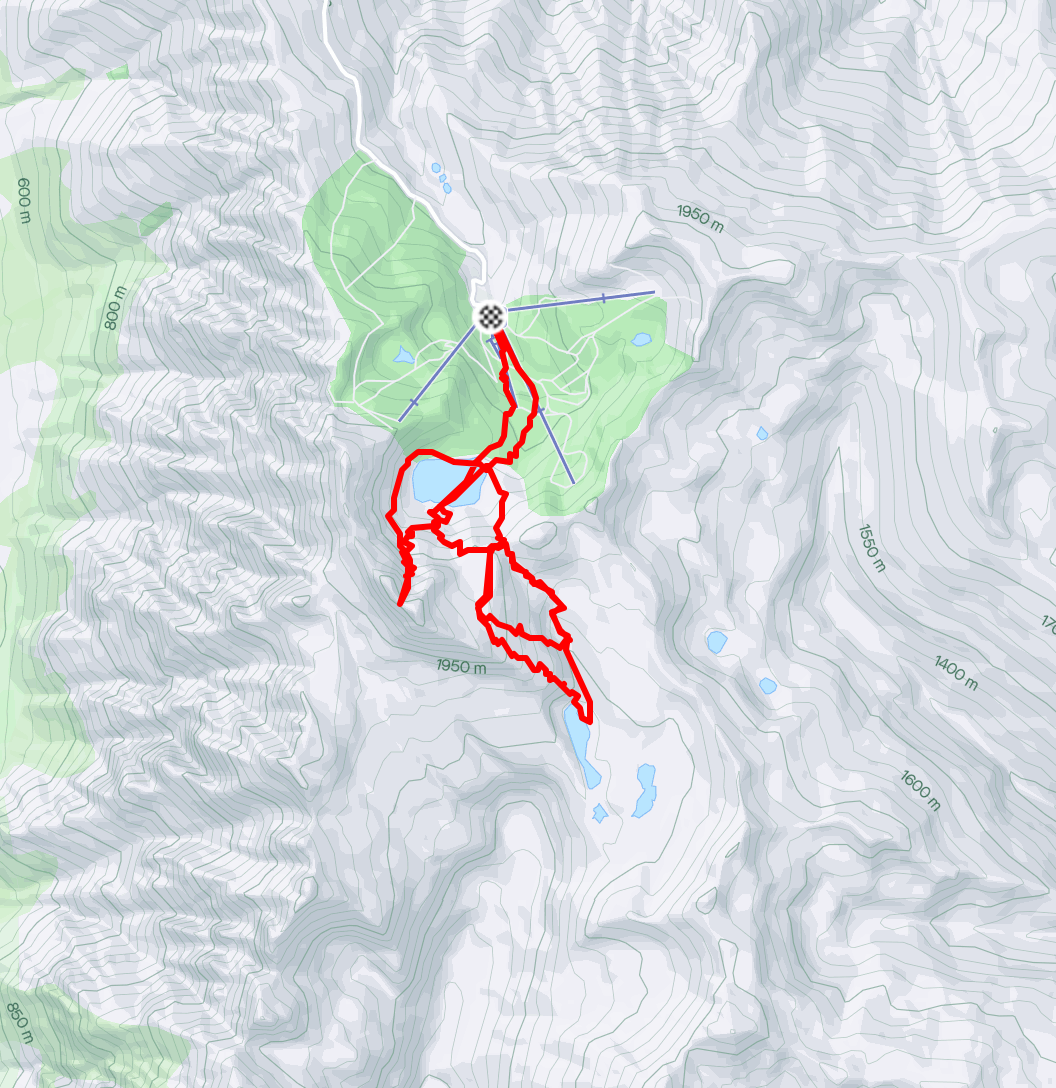
Day 4: Remarkables. 14 km | 1760 m+ | 4/7.5 hours
Our final day saw us back in the Remarkables ski field and we planned to go big. We had another, local Kiwi guide join us for the day, Andrew, and we got away early, heading straight up the main piste, with the Grand Couloir in our sights. A few hours later, after skinning until it was too steep and deep, a bootpack was needed. An hour or so since reaching the foot of the climb, we stood at the top of the Grand Couloir, looking down on the Remarkables, chair lifts in the distance, super excited for the descent to come.
The skiing was the best of the whole trip: steep, soft and a long run. I was pleased with how I skied the steep couloir, managed the slough/sluff, and wasn’t phased by the tighter pinch points. Skiing all the way down to Lake Alta for lunch, this must have been the longest run of the trip. Still short in length by European standards, but nevertheless good and very welcome. After passing for a refuel, we followed this up with the Hidden Couloir, then a quick bonus couloir, before heading back to the car. Skiing the Grand Couloir was a real highlight of the trip. Epic snow conditions, steep skiing and a good group vibe made for the best day of the trip.
Over the last week or so I’d really developed a new appreciation for skiing in New Zealand and skiers that learn here. It’s by no means easy and I also found it mentally challenging in particular. I’ve never talked about the weather so much and had to change plans so much constantly, and been kept on my toes so much throughout a whole day. You can ski every type of snow in the space of about 100 metres, so focus is needed and the ability to adjust skiing style continually based on the immediate snow conditions.
Skiing here also requires time, patience and ideally a healthy budget. Helicopters buzz around the mountains dropping groups off in tiny weather windows. Heli skiing here is much less expensive compared to Europe and most of the rest of the world, but it’s still not cheap. Sitting tight and waiting for the weather to change and then taking advantage of the immediate conditions is the name of the game here. I’d learned this over the last few weeks and despite being warned about this, adjusting to this mentality was more frustrating than I’d imagined. I guess in Europe there’s so many options that there’s always one in good condition, and the mountains are so well connected that it’s never that difficult to get around.
I was potentially disappointed in my skiing during my days in the Cass Valley. I felt I struggled in the conditions, skiing the deeper snow on a slimmer touring ski, or the huge variation in snow, and most memorable was my difficulty skiing on the thick crust that developed in the afternoon on the runs back down to the hut. I hadn’t been on skis for a good 17 months, so was rusty, I won’t let it get that long before a big trip again.
Come the second week in the Southern Lakes, though, the conditions were more familiar to me and I felt my skiing came good. I finished feeling more positive and keen to continue developing my skiing in poor snow conditions to avoid this feeling again and making my time on snow more difficult than it needs to be. The more relaxed I was this week meant overall I could enjoy myself and not be so hard on myself or critical on my skiing. We’ll see what conditions next winter brings and which part of the Southern Alps I end up skiing next.
Tasman Glacier
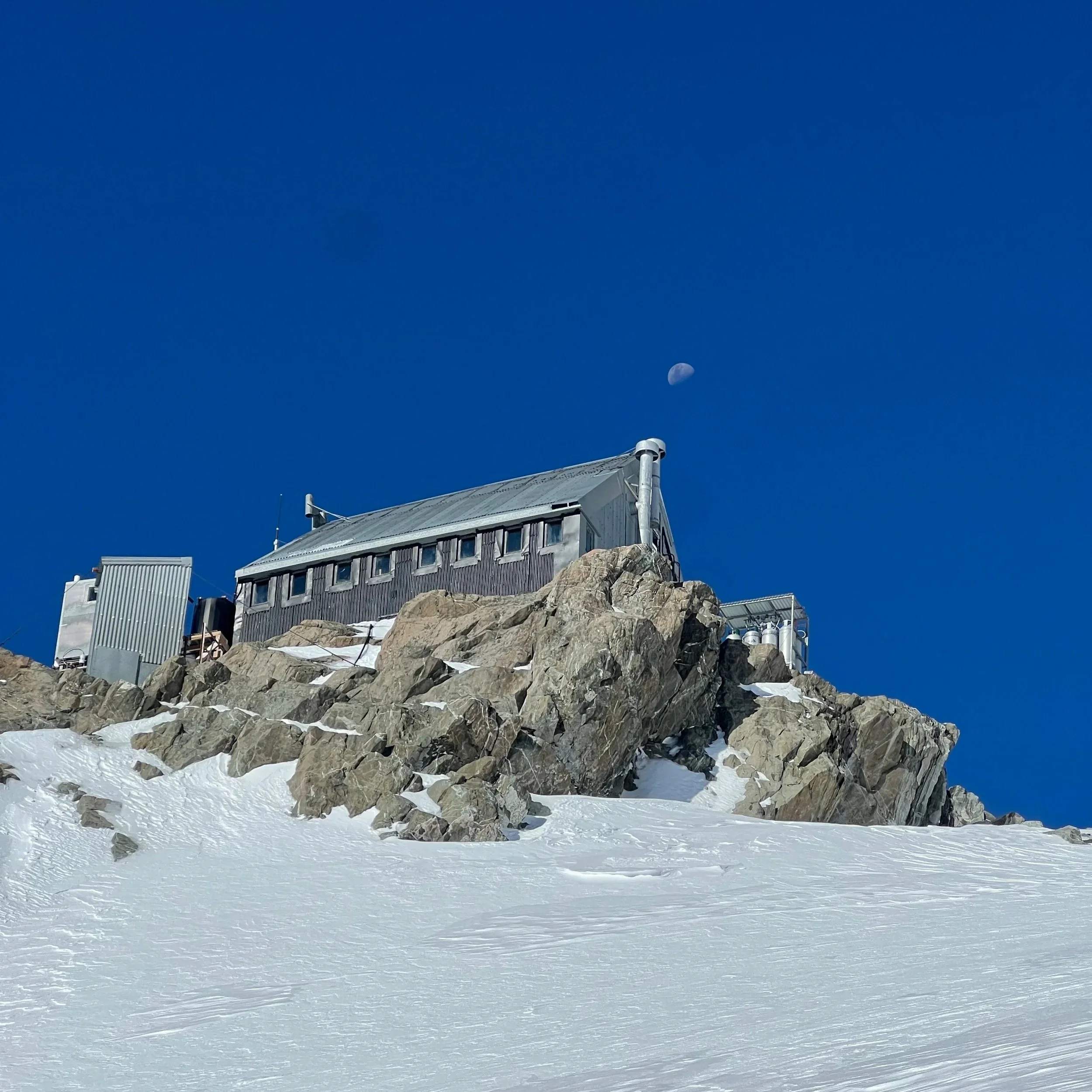
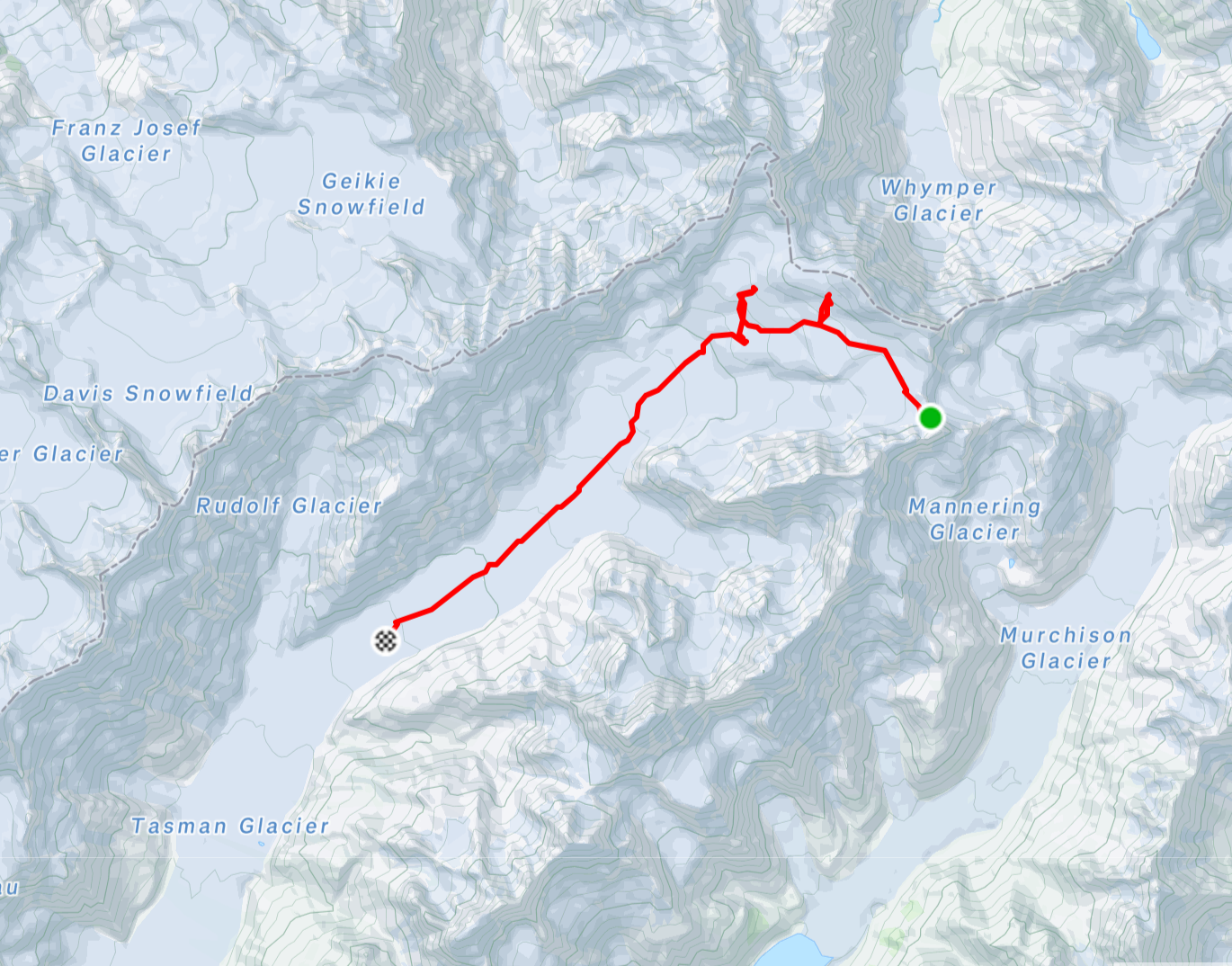
The Tasman, sitting in the Mount Cook National Park, is New Zealand’s longest glacier and offers easy access to a multitude of ski touring objectives. Perched high atop the glacier ridgeline, the Kelman Hut at 2460 metres elevation is one of New Zealand’s highest alpine huts, sleeping 30 people it provides a convenient base for touring the area. The only catch is that it has no heating, earning it the affectionate nickname of ‘The Fridge’. That and the steep steps down to the toilet that hangs over a steep face, requiring the use of a bucket in the night to avoid any moonlight falls.
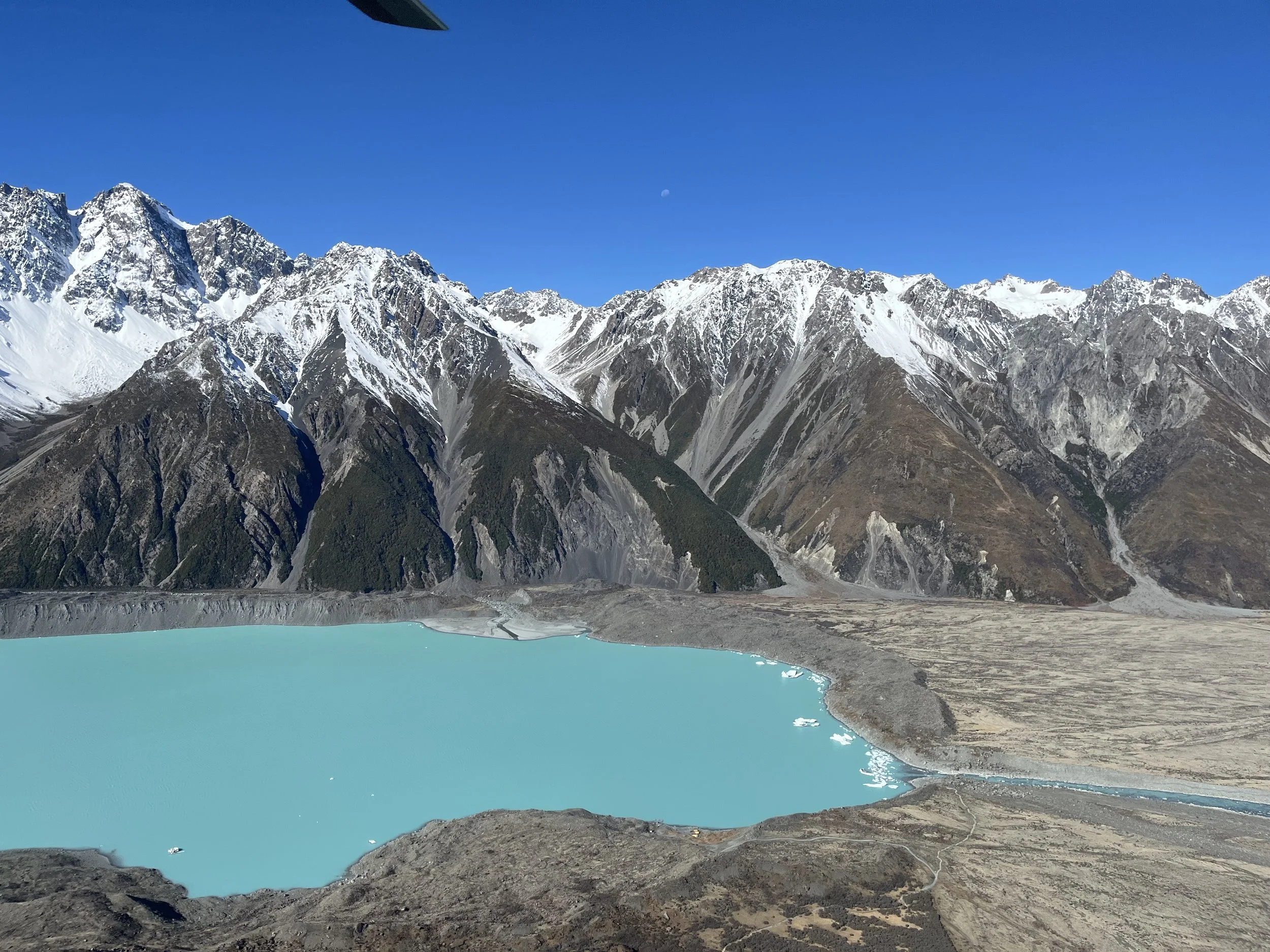
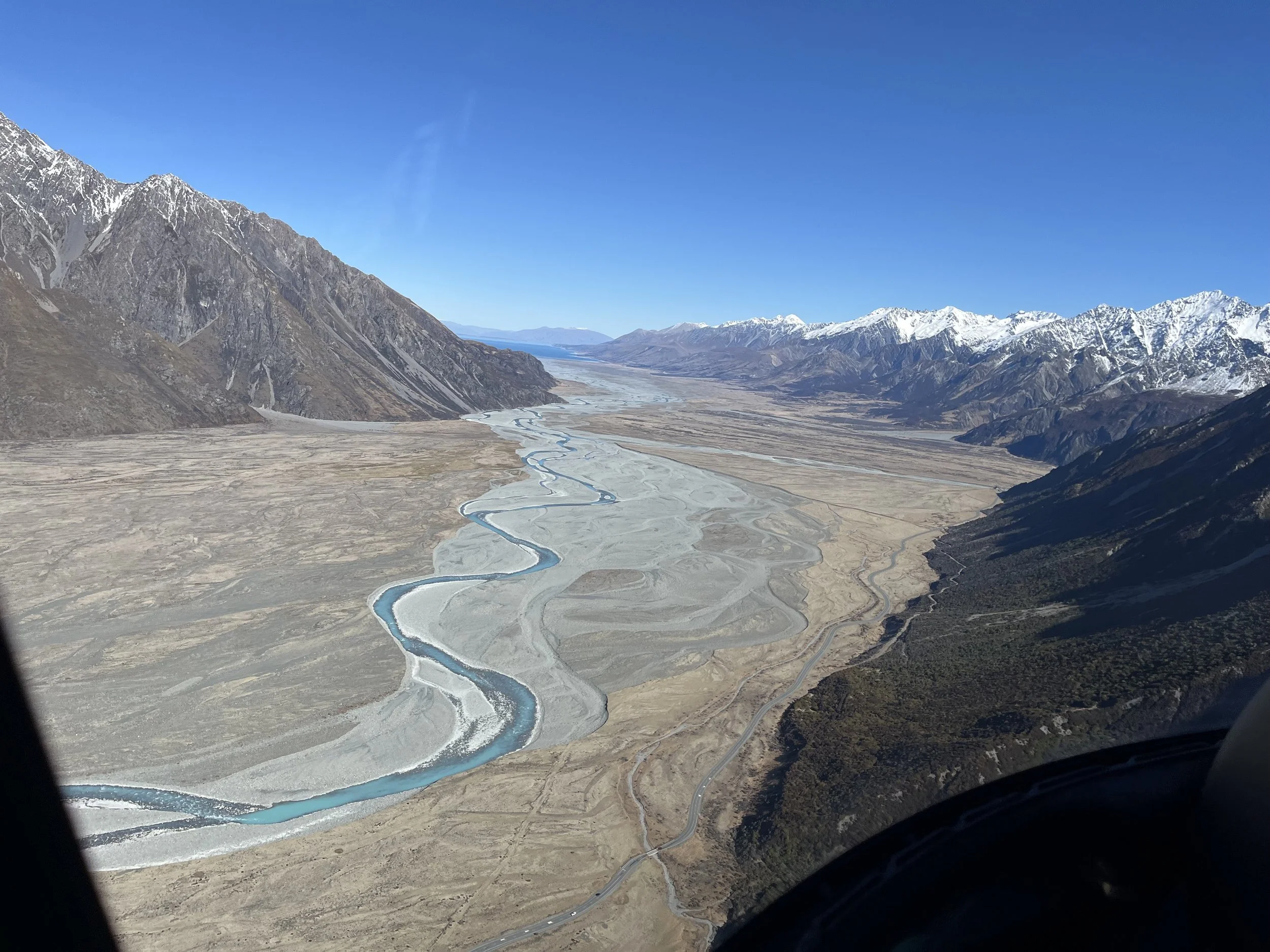
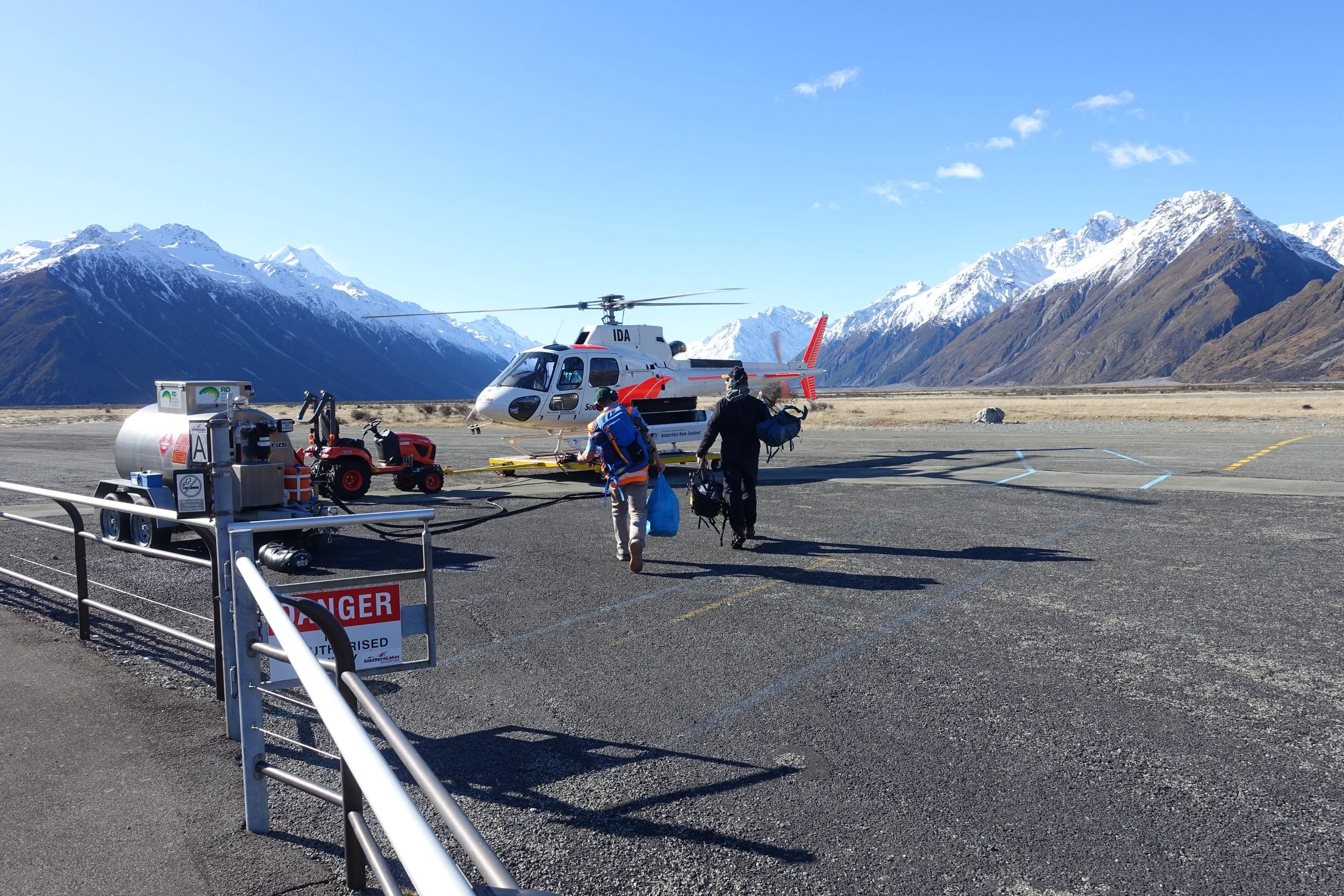
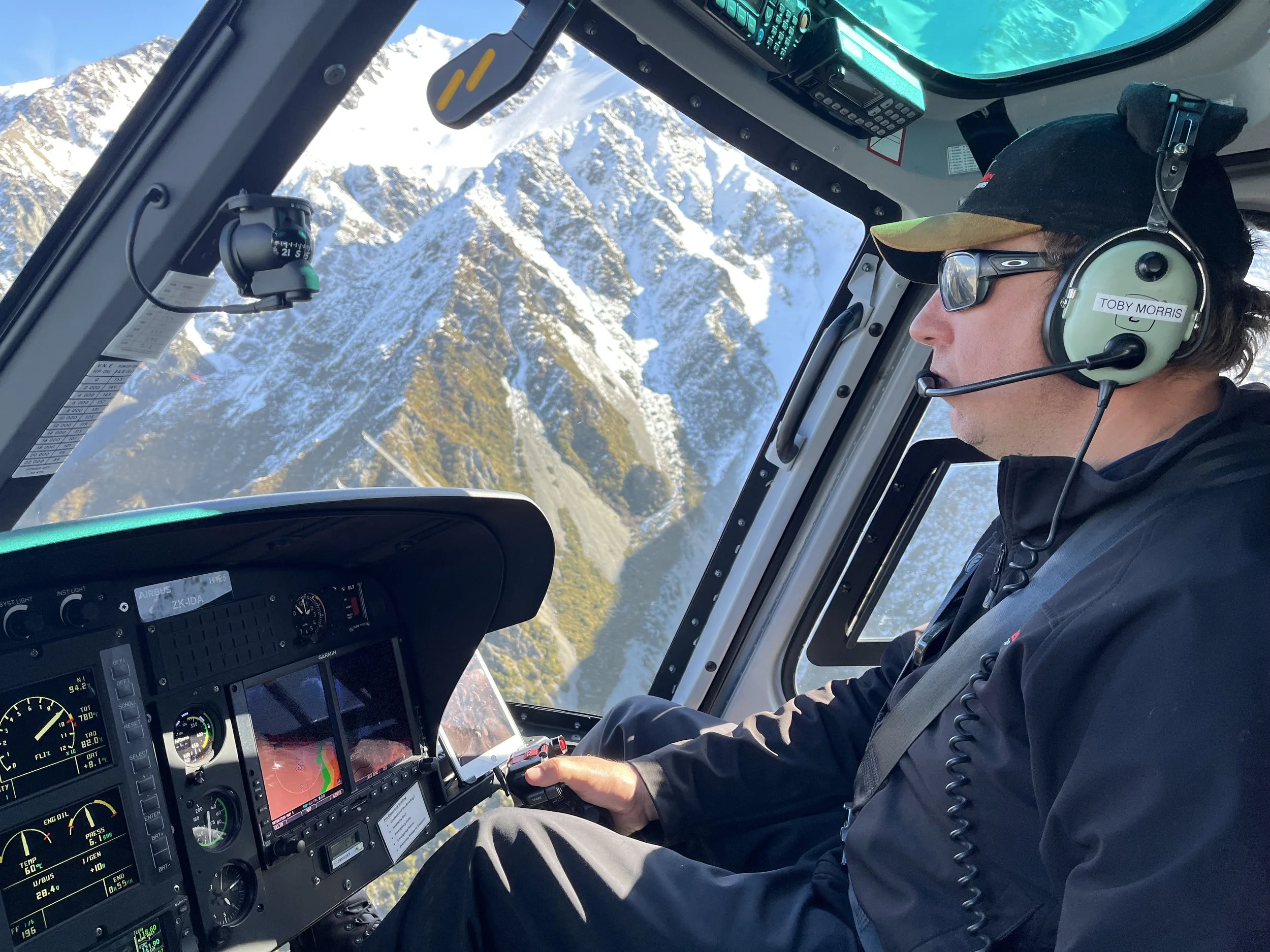
It’s common practice to be flown in to the top of the glacier, a 20-minute ride from Mount Cook Airport in the valley flats, with your food, sleeping bag and kit, and ski for as long as the weather window allows. On the flight in, you can scope out good snow, major crevasses and ski descent lines of particular interest, and look for any warning signs of instability or open crevasses.
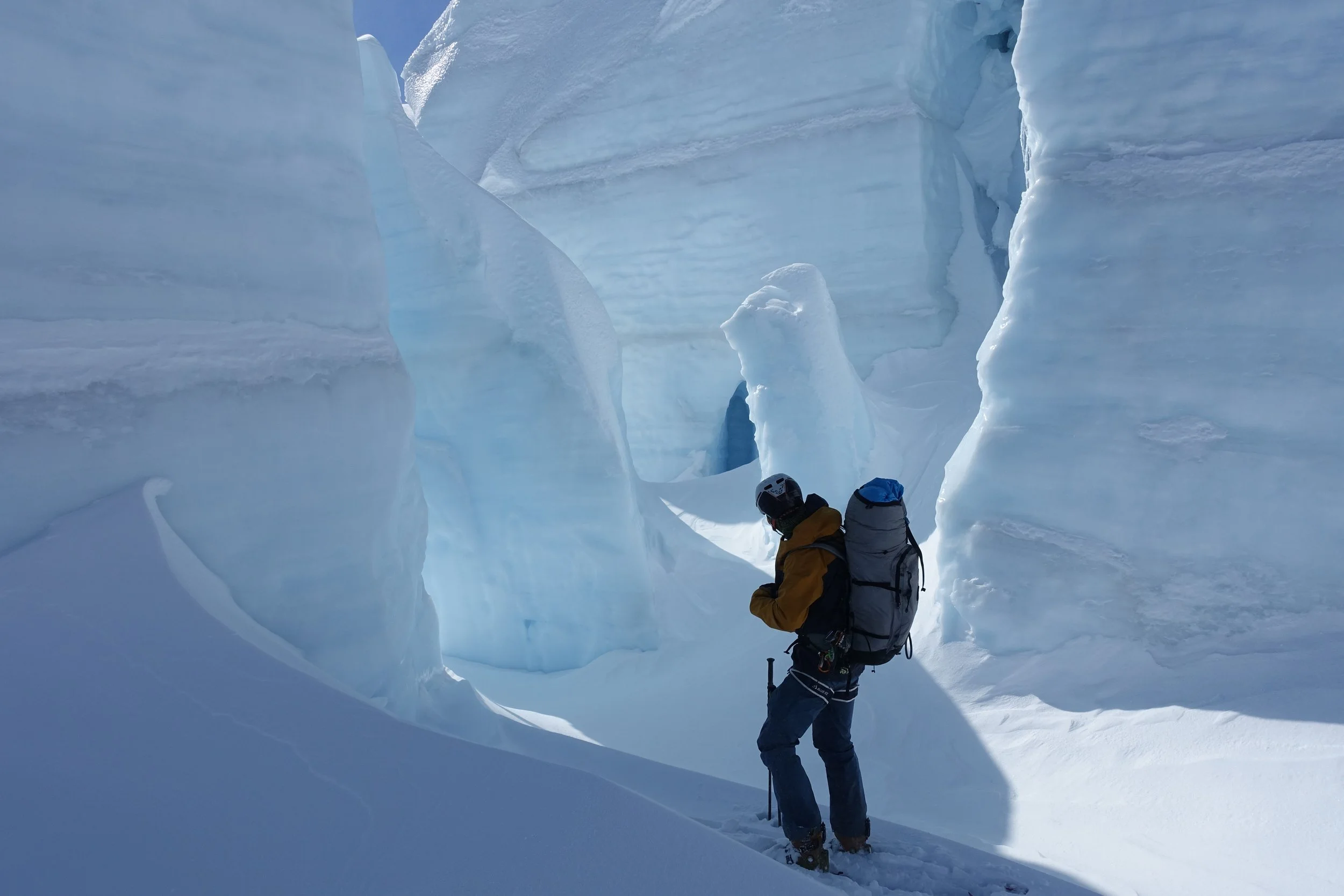
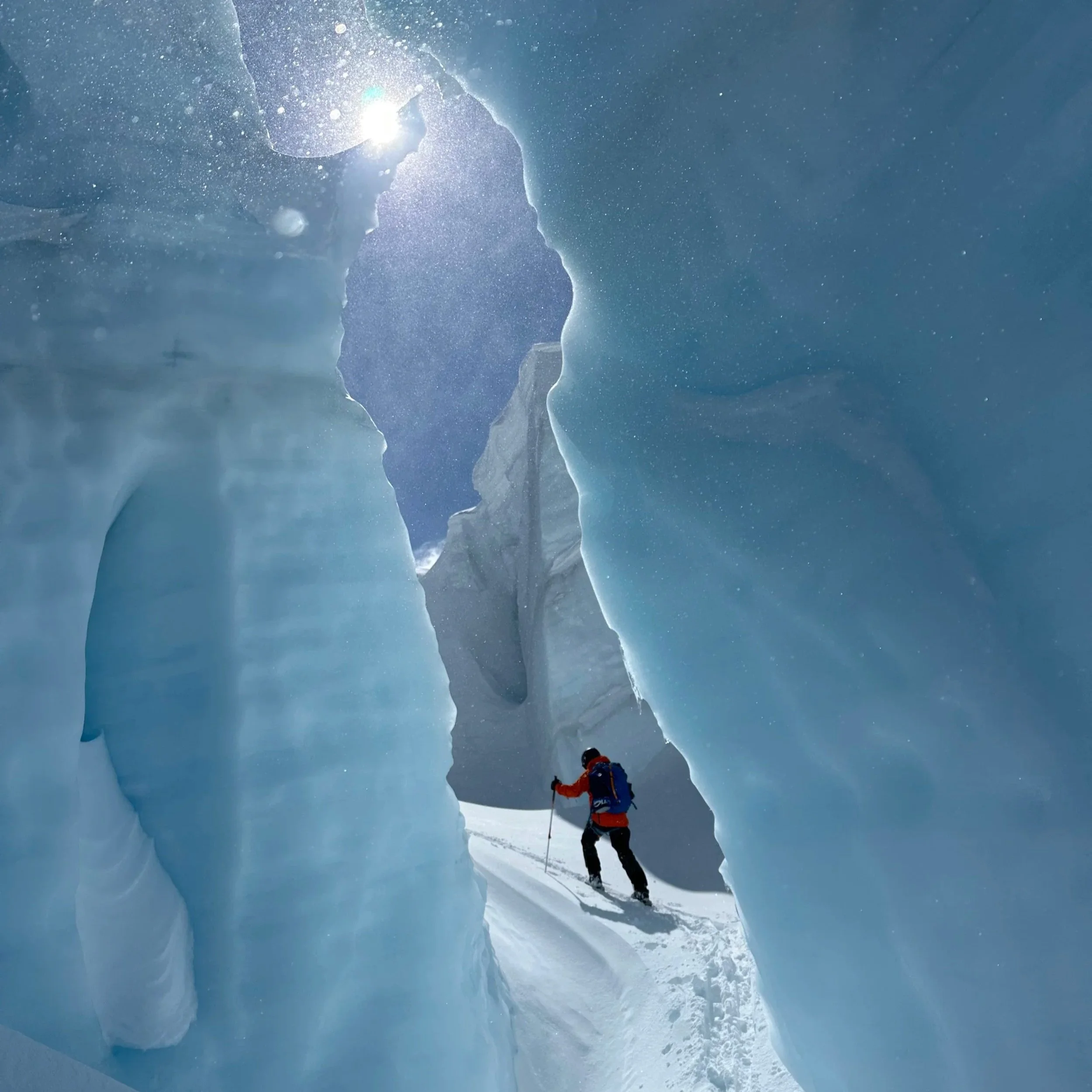
‘Canyon Lands’ is a large area of icefall and large crevasses in the centre of the glacier. This can be skied straight through, surrounding you with high walls of blue ice and snow and is a surreal experience. Visits to the glacier finish with a run to the end of the snow line, where you call in a pick up. There’s a wide expanse of moraine for many kilometres, down the valley, where the whirl of a helicopter emerges and lands with precision by your side, whisking you back to solid land.
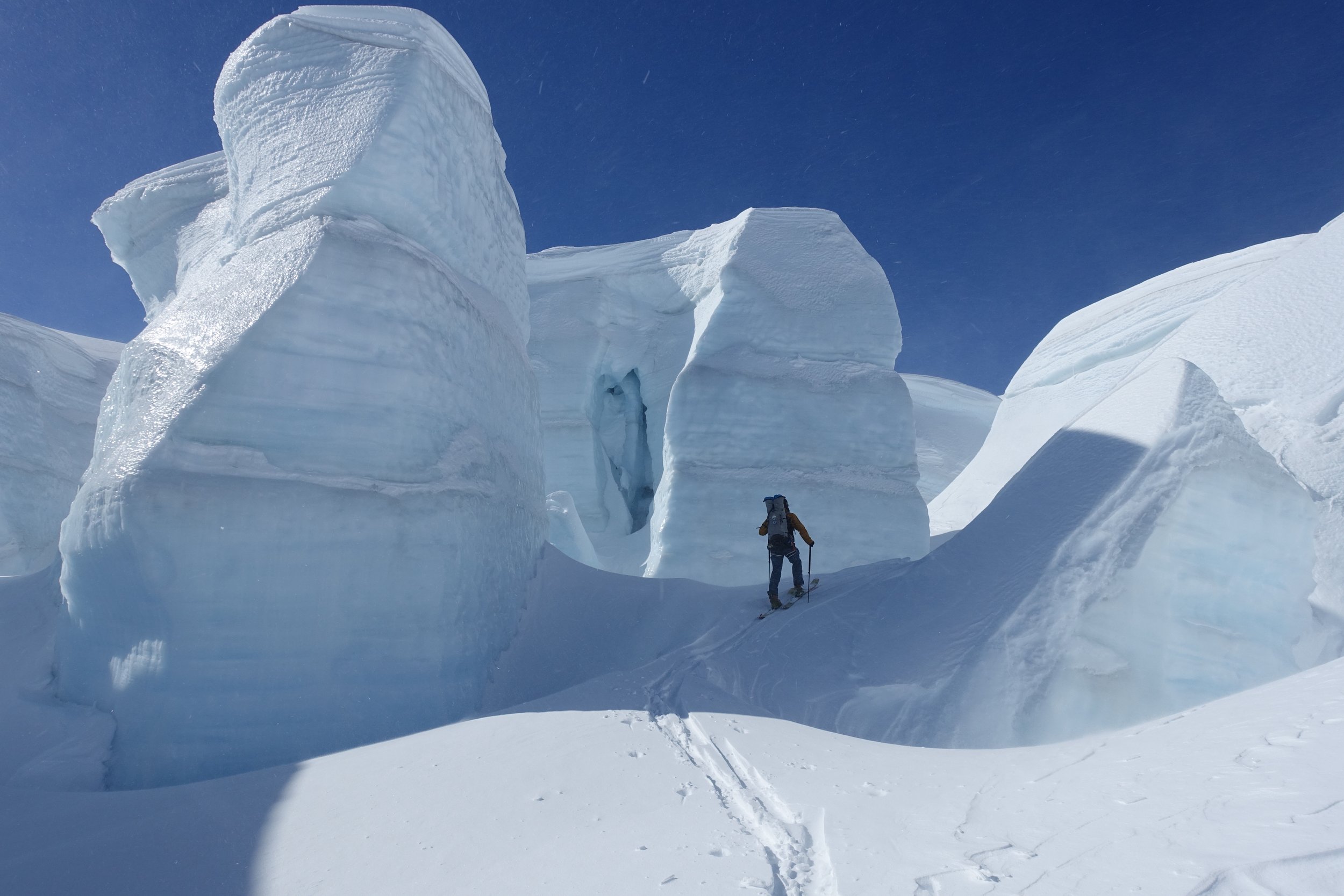
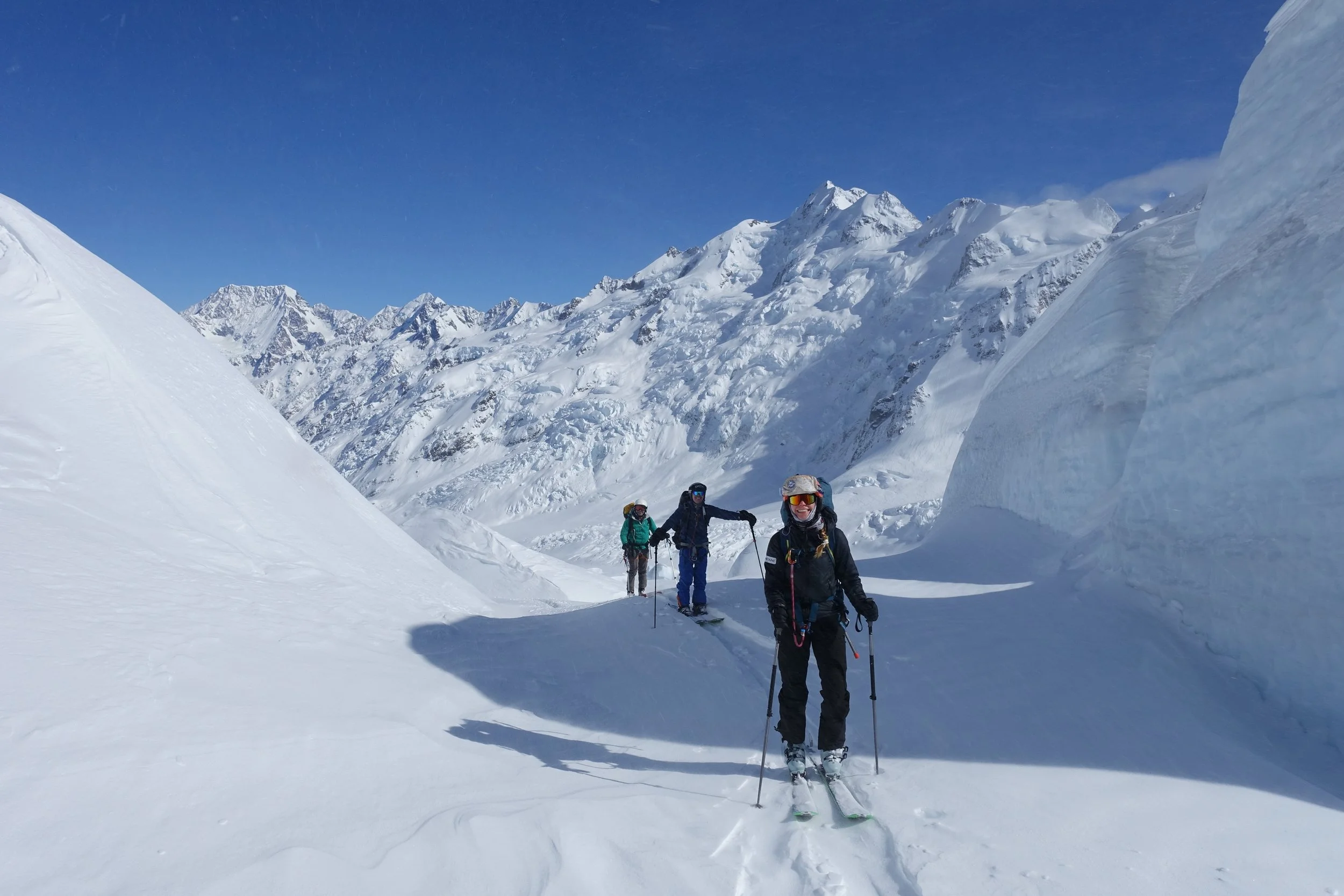
Day 1: 9 km | 600 m+ | 2/3 hours
Day 2: 16 km | 430 m+ | 2/4 hours
Day 3: 14 km | 1175 m+ | 3/5.5 hours
I’m back down south, this time with Cillian from Wanaka Mountain Guides. This trip was a last minute arrangement as my plans to ski the Craigieburn Haute Route were cancelled last minute due to lack of snow. Heading further south and to higher elevations in the Mount Cook area would bring better snow conditions and some touring in a unique environment.
Surprise surprise, my five-day trip turned into short, sharp, under 24 hour mission in and out of the glacier due to an incoming front. Winds were forecast to pick up throughout the week and if we didn’t get out we’d be stuck in the hut for multiple days, unsure of a pickup time.
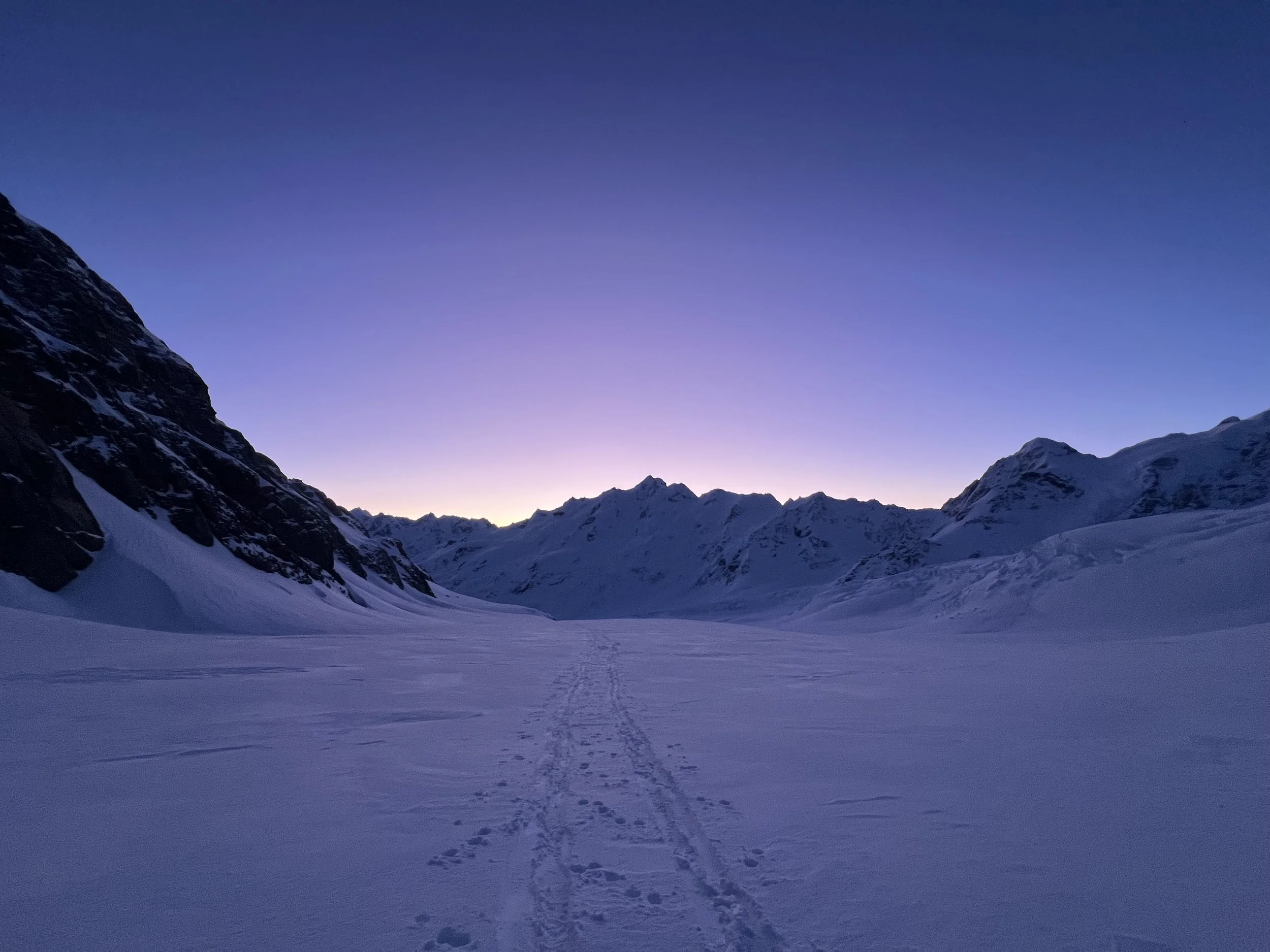
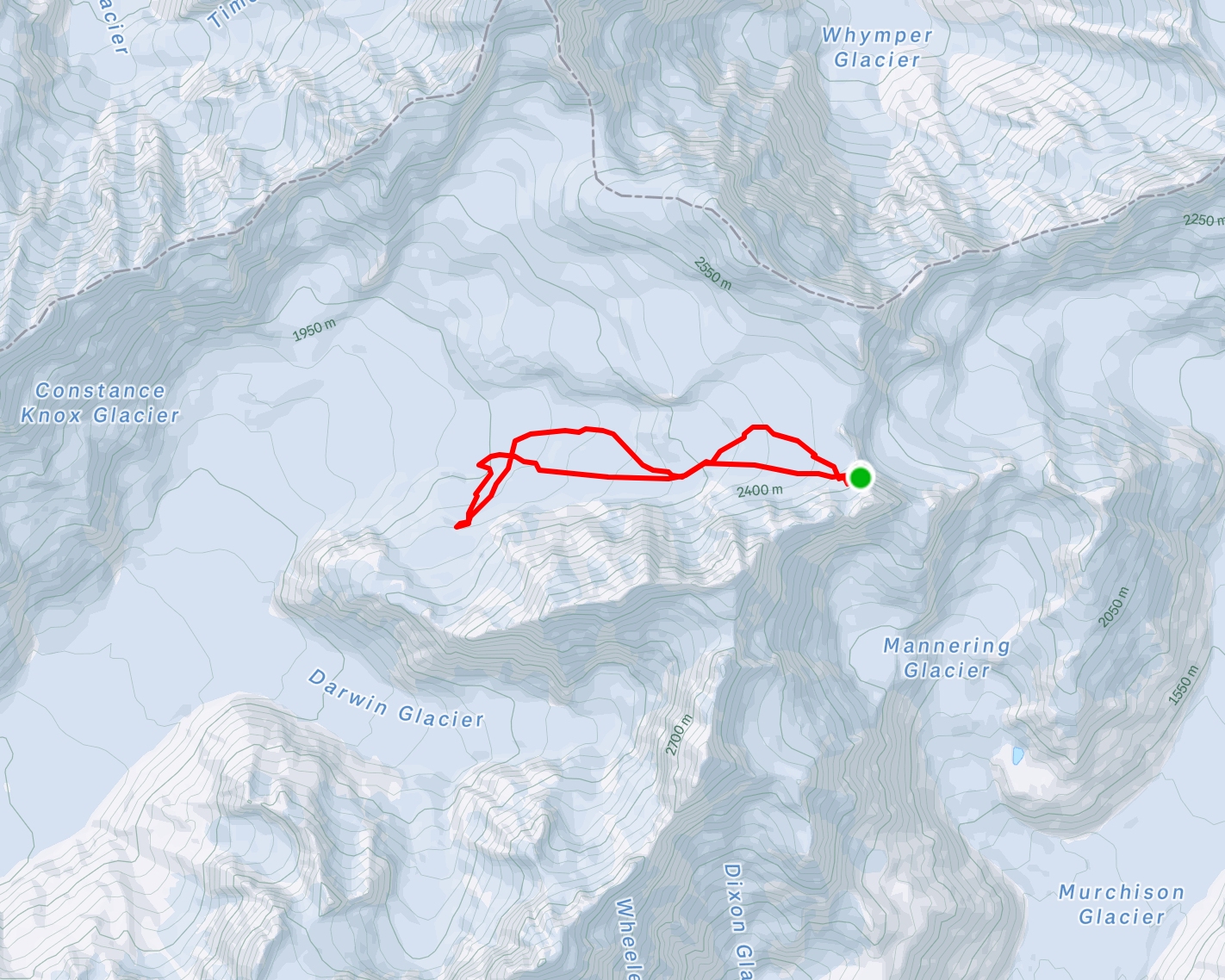
We flew to the top of the glacier at around 16.00, dropped out bags and headed back out into the clear evening light. Our warmup run took us straight back down the glacier we just flew up and then a short pitch up the Darwin Shoulder to ski some softer snow that was just about still in sunlight. Skinning back up to the hut under headlamp light, we settled in for a chilly night, the temperature in the hut reading a brisk 4 degrees as we ate dinner.
The following morning we headed down from the hut and towards Hochstetter Dome, dropping our overnight kit and skinning roughly halfway up before returning to our bags. The snow was surprisingly good, with noone in sight and ideal conditions all around and some fun turns. We continued down the glacier, dropping our bags again and this time heading up towards Lendenfeld Saddle. Snow conditions improved again and we enjoyed boot high powder that was soft and cold.
Continuing to follow the glacier down the valley, we passed through Canyonlands which was initially fairly intimidating as bright blue ice towered far above my head. We then cruised down several kilometres of relaxing 20 degree glacier slopes to the heli pick up point. Cloud began to roll in and winds picked up as we waited for the pickup, but we made it out in time, back at the airport for around 3pm. We headed over to NZAC’s Unwin Lodge soon after and discussed our options from here over a brew.
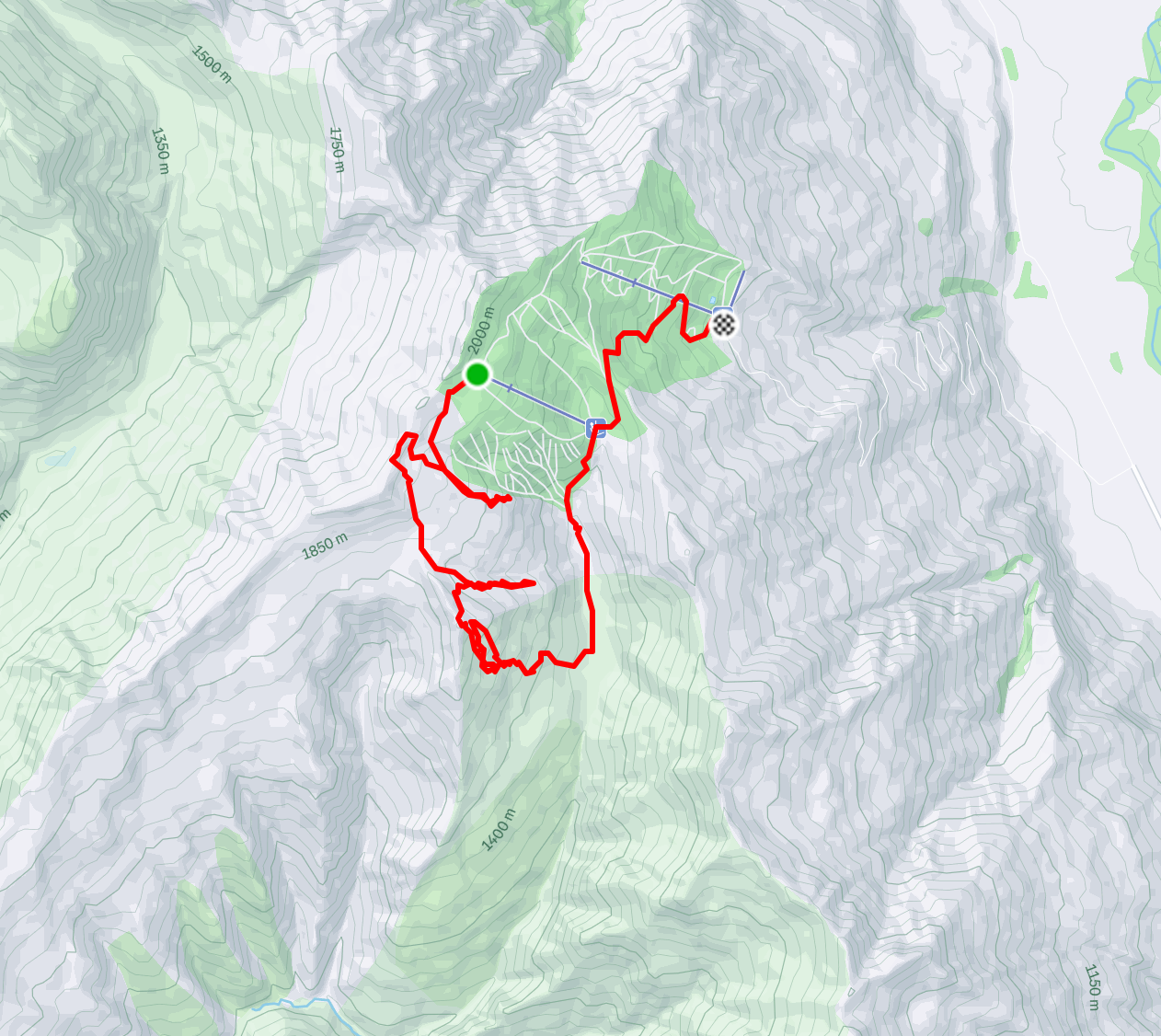
We relocated to the Wanaka Mountain Guide’s lodge in Wanaka, and for the following few days we refreshed avalanche knowledge and practiced our crevasse rescue skills as the weather closed in and rain fell. We did manage to get in a third day of skiing in, though, a few days later, heading up to tour off the back of the Remarkables, as I did last year when the weather was hit and miss. Similar runs to last year but we skied all the way to the valley floor this time and then skinned back to the car park an alternative way.
This was a short, sharp few days on snow but I enjoyed visiting a new area of the Southern Alps and a unique environment, plus my first time flying in a helicopter!
Group photos
2 Sep 2026
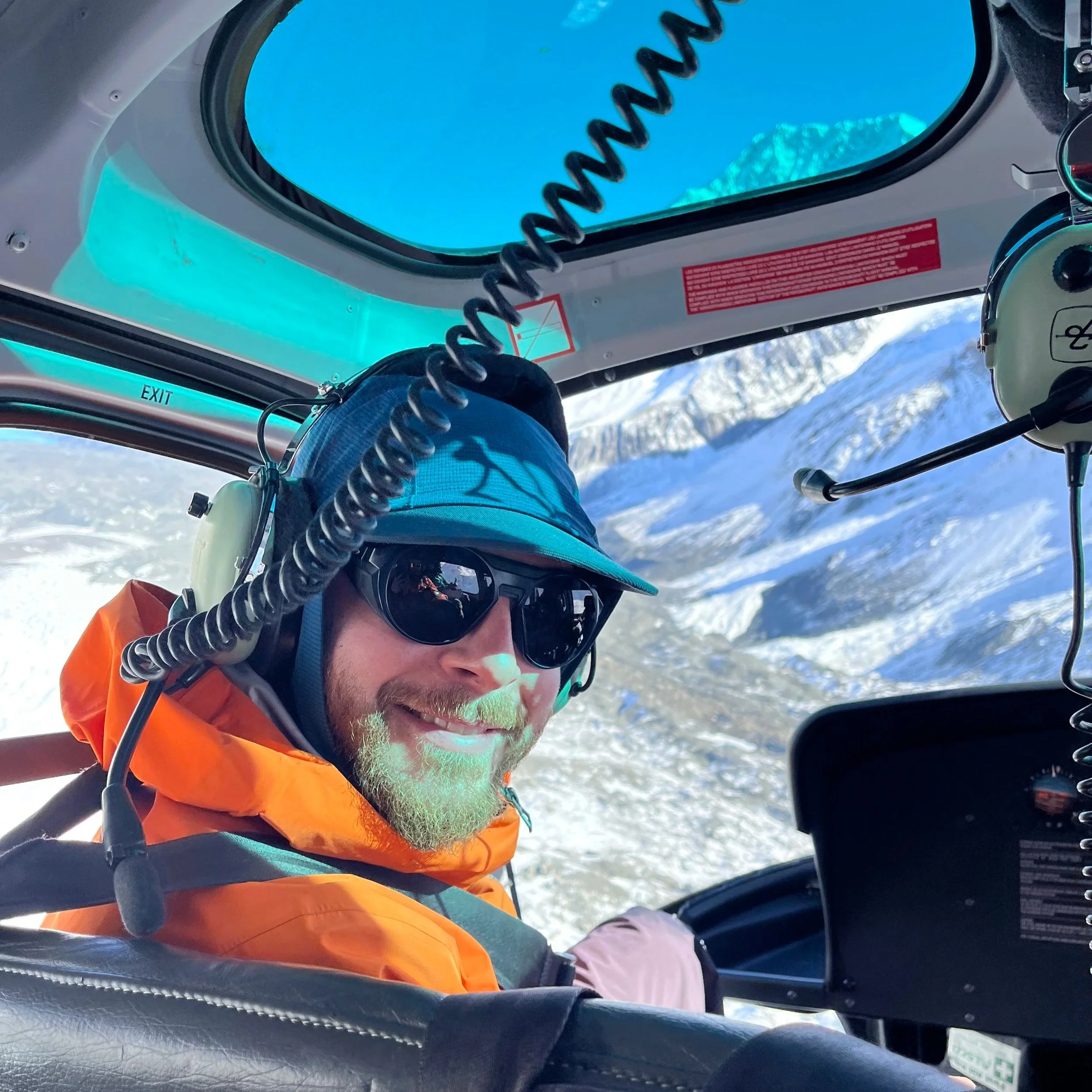
In Sep 2026 I headed south again for a second attempt and an original plan to link up a ski traverse of the Craigieburn Range club fields with Dave Lewis through Anna Keeling Guiding.
As per for all my ski forays detailed on this page, the forecast wasn’t looking promising so the plan wasn’t going to work in its original format.
Assembling the team at Anna’s lodge in Castle Hill village, we headed over to Craigieburn ski field to give it a go. There wasn’t much snow about, but supposedly enough to make it work. The problem was the wind. Strong gusts of 60+ kph had our kit flying around the car park as we got ready.
Our crew was led by Dave Lewis, a British IFMGA Mountain Guide, alongside myself with two Aussies from Sydney and a Kiwi from Auckland.
Craigieburn Range
The Craigieburn Range is home to a number of club fields, including Craigieburn Valley, Broken River, Cheeseman, and Mount Olympus.
The Craigieburn Valley is a smattering of club fields along along Highway 73, famous for challenging off piste.
Built in the 1940s, initially a men’s only ski field and women were encouraged to head to the more mellow Broken River.
There are around 15 club ski fields in New Zealand; most lie on the South Island. Six of the best ones, known as the Selwyn Six, cluster near each other in the Southern Alps. Each has its own character.
Still mainly run by small clubs on a non-profit basis, the ski fields retain their adventurous soul and community spirit. They extend a relaxed Kiwi welcome to visitors.
In New Zealand, decades later little has changed. Club Fields remain non-profit organisations, run by club members. Most are un-groomed, making it essentially lift-accessed backcountry. In the evenings you share tales of adventure with a handful of like-minded skiers in basic wooden lodges. Because they aren’t publicised, the fields aren’t widely known.
Offering good access from highway 73, and proximity to Christchurch, for the last 70-ish years, locals have been heading up to these mountains to ski. In the process they’ve built a range of infrastructure (small ski areas, lodges, huts, and roads) that allow you to get to the snowline quickly.
Craigieburn has some of the best freeride terrain in the country. In essence it comprises of two large basins which receive ample snowfall from mainly easterly but also big westerly storm systems, and whilst it tends to attract advanced to expert skiers it also has a good range of intermediate terrain too.
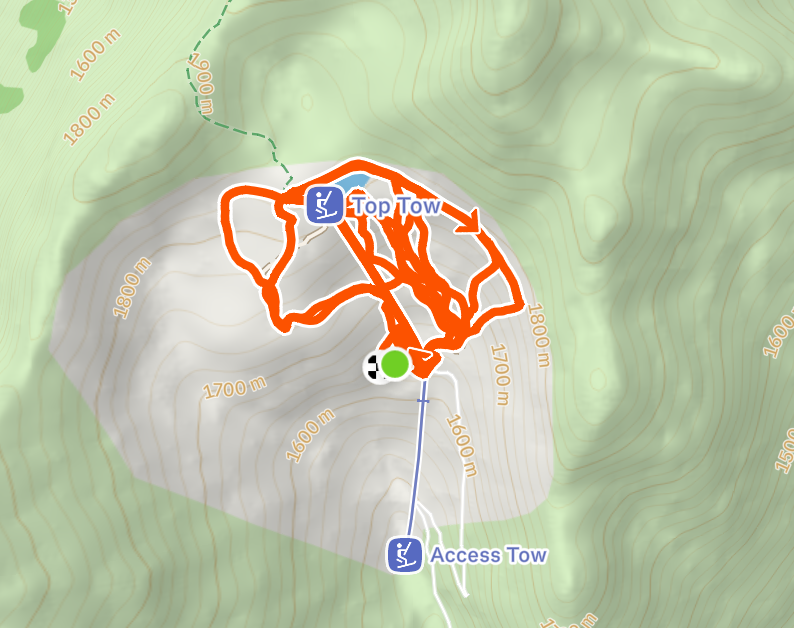
The layout is such that three tows take you to the top of the ski hill from where you can traverse in either direction to find the kind of skiing that best suits you; it's been described as poor man's heli-skiing', so expect powder and relatively quiet terrain that can vary from the very steep chutes of Remarkables to the big open powder field of neighbouring Hamilton Face, and next to this more manageable chutes of The Gut to name but a few options.
On top of this there's very easy backcountry access - short traverses or hikes will get you into a good mix of terrain - and you can also access the neighbouring club ski fields easily.
Since Craigieburn is part of New Zealand's unique club ski scene you'll be expected to help out with minor duties such as cleaning or prepping for breakfast or dinner.
This is a very different vibe.
Craigieburn is a non-profit organization run by club members. It doesn’t have chairlifts, ski rentals or snow making equipment. Instead it provides three, high-capacity rope tows so your arms are sure to get a work out in addition to your thighs.
What you also get is some of the most exciting ski terrain in NZ along with epic backcountry that really will challenge the very best.
A welcome rarity in a hut - showers - even better, they’re hot. Lift assisted touring. When I say lifts, these are NZ clubbie lifts, so nut crackers.
The rope tow is a Kiwi invention, introduced in the 1930s by then Labour prime minister Michael Savage as a fat tax to retain powder for the better-conditioned skier. Perhaps that's why not even a marketing manager negotiating a pay rise would call the club field resorts the best in the world. They are, however, the soul of New Zealand freeride.
You need to master ‘the nutcracker’. These look like over-sized household nutcrackers, and they provide excellent crowd control. You use them to grasp the ski-tow rope. Time after time I flipped the steel arm, the rope spat me off and I slid back towards clanking cogs and a tractor-powered generator whirring in a wooden shack.
You wear a mountaineering harness with this hardware attached by cord. I finally got the hang of flicking it over the tow rope and clinging the handles together. Then I was at the top!
The infrastructure is quirky. This is New Zealand. They have a unique approach to building things. Like roads. All of the little ski areas are idiosyncratic. Most of the time that’s charming, but occasionally it’s a pain in the butt. If a big storm comes in it can take a while for some places to clear their roads.
It takes a bit of local knowledge to make everything work smoothly here. If you don’t have that just relax and accept that you might deal with a few unexpected inefficiencies.
Score the powdies at Mt. Olympus and you'll come to believe - like the rabidly loyal club members - that this really is the playground of the gods. Mt.Olympus is both the proving and breeding ground of some of the best Kiwi freeskiers such as C Murray and Hank Bilous.
Tucked in the Craigieburn Range, Mt Cheeseman is a relaxed, family-friendly club field with wide basins and natural terrain. With two T-bar lifts, a learners’ tow, and 320 metres of vertical drop. The ski area sits within an alpine basin with terrain that varies from mellow to steep.
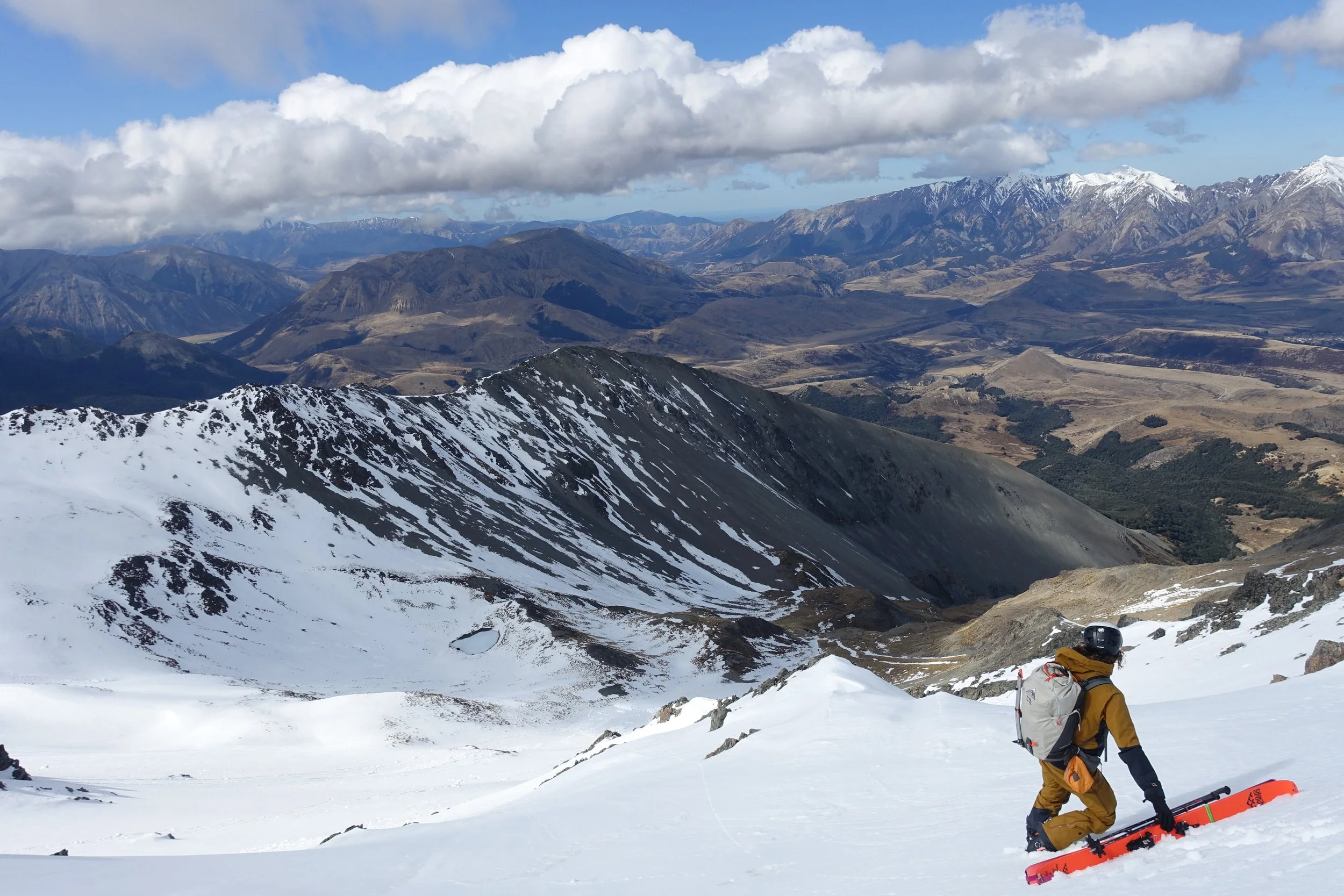
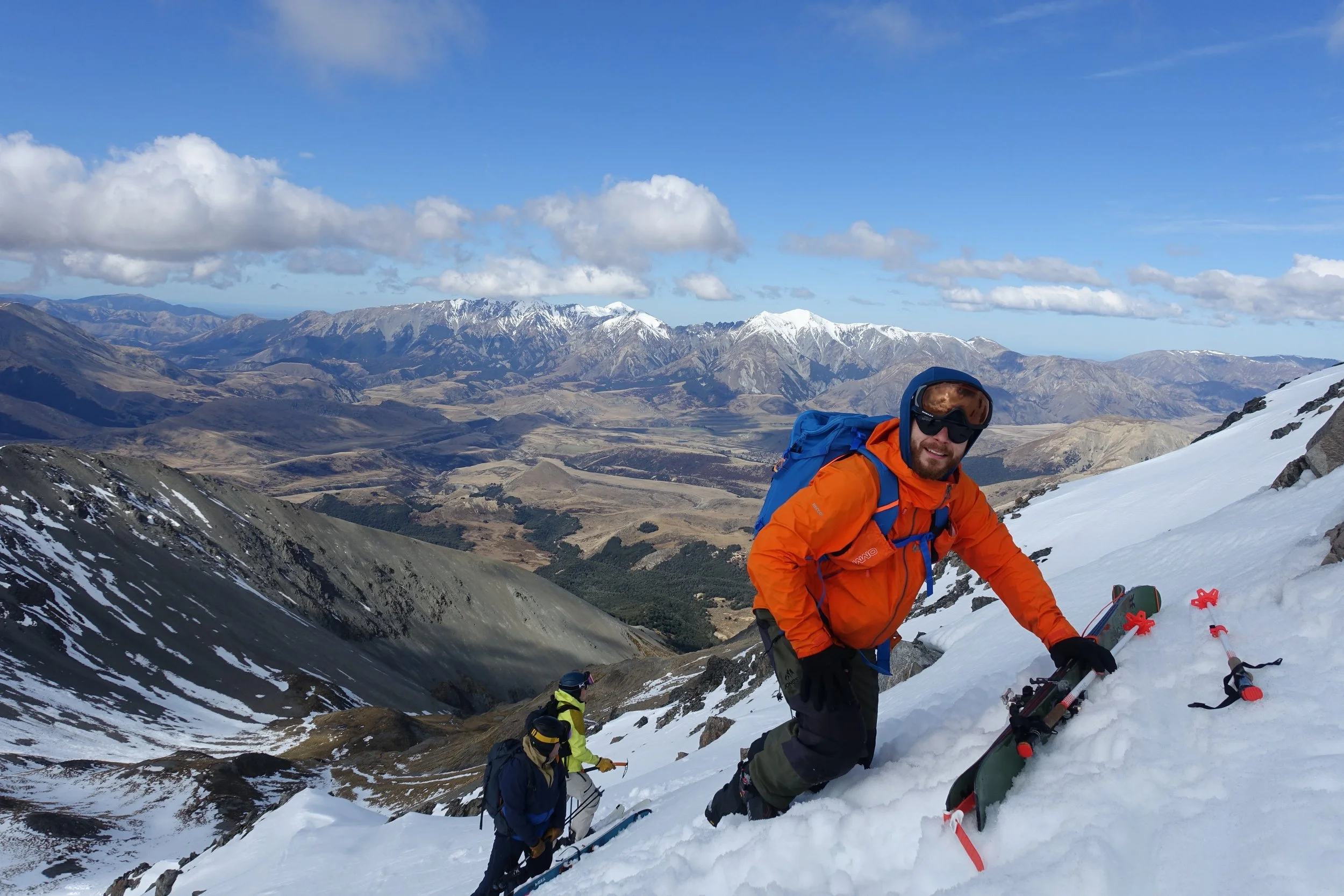
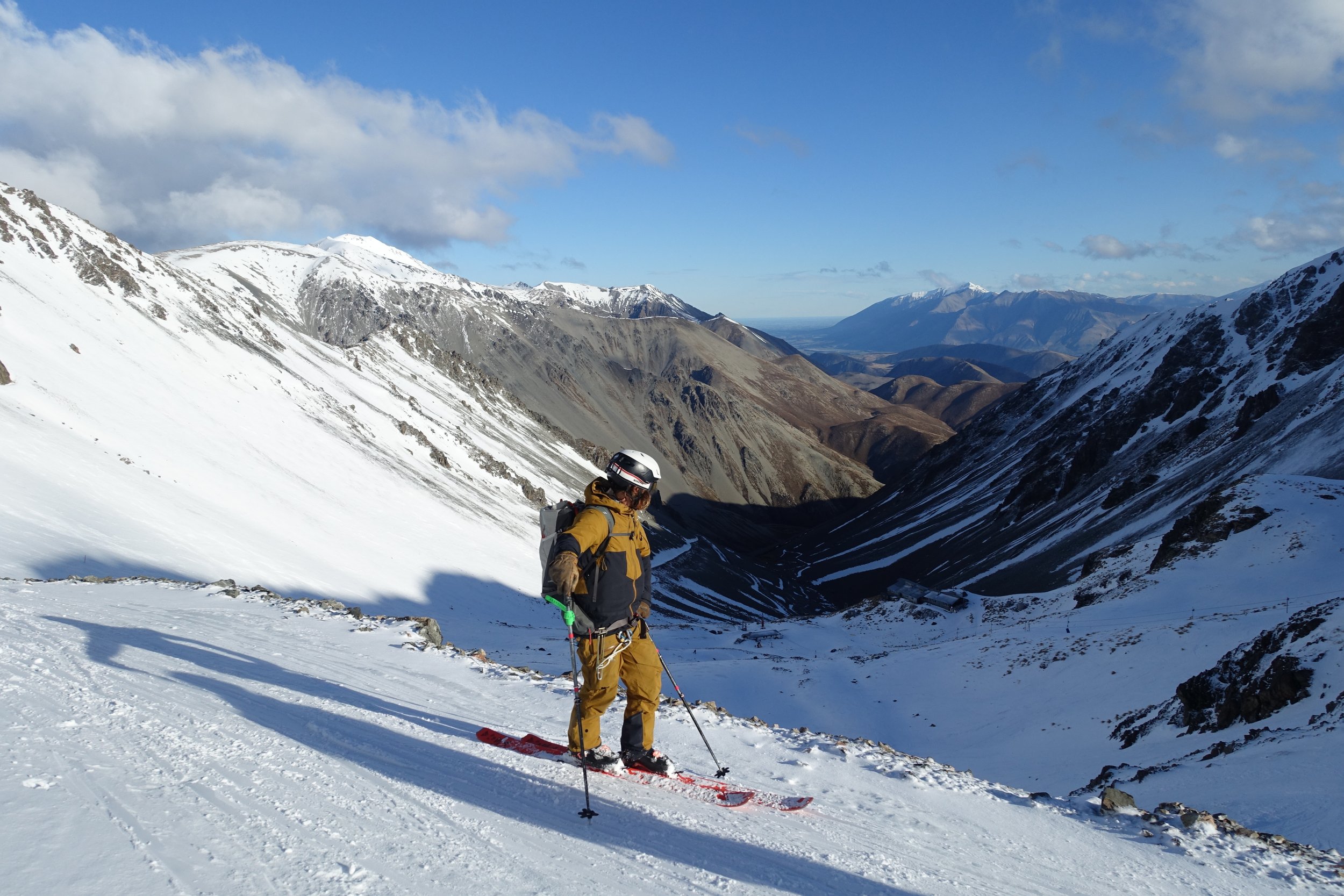
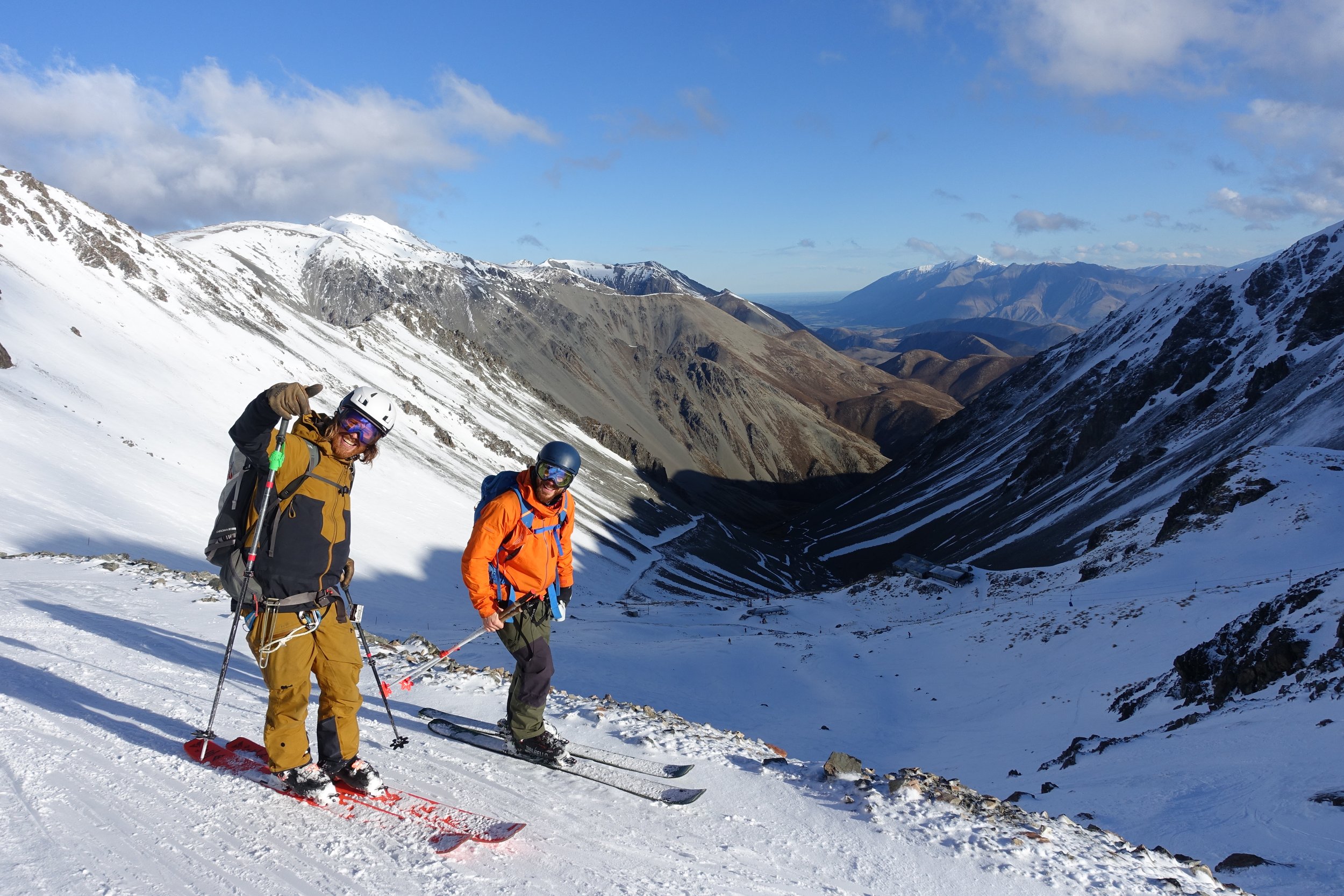
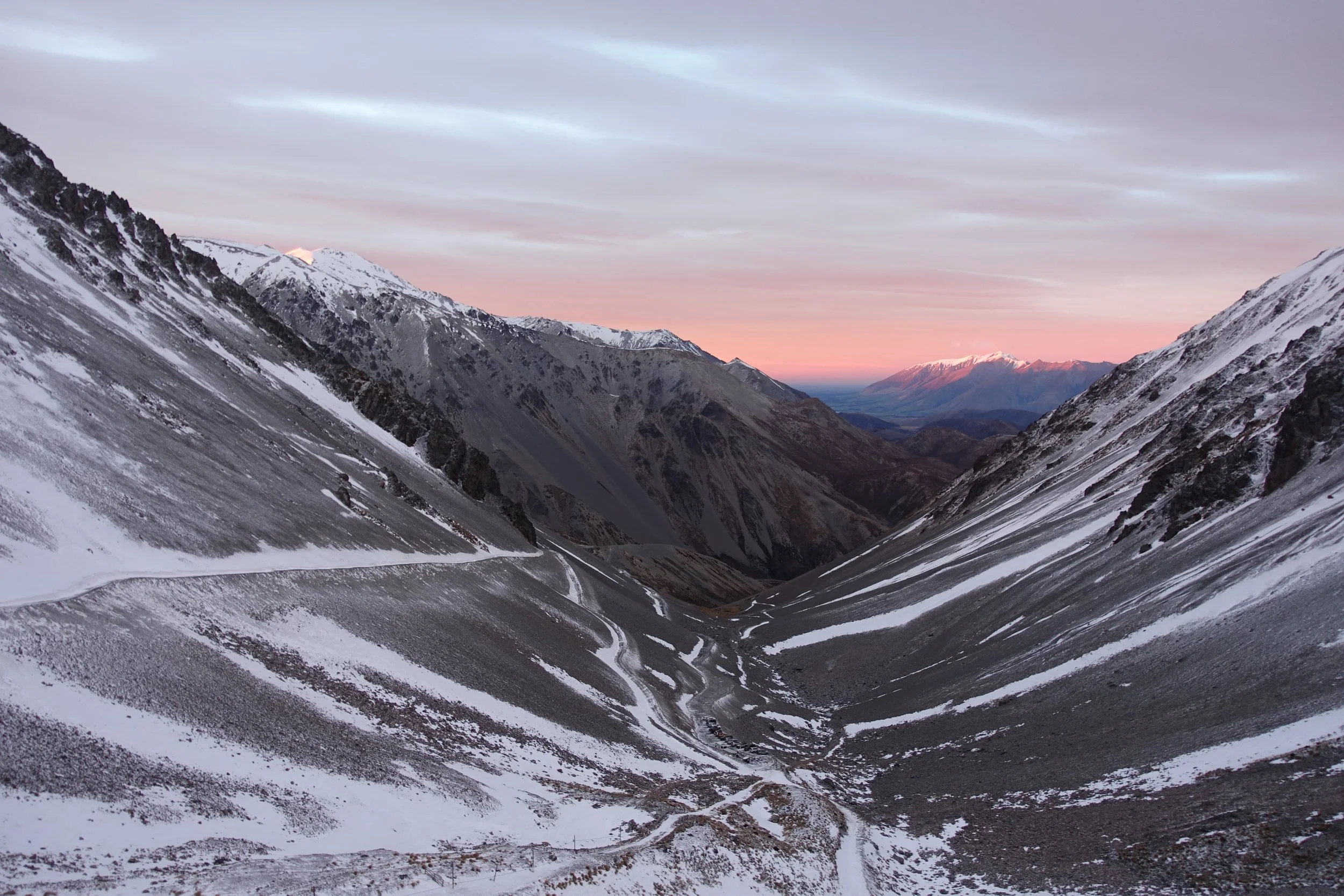
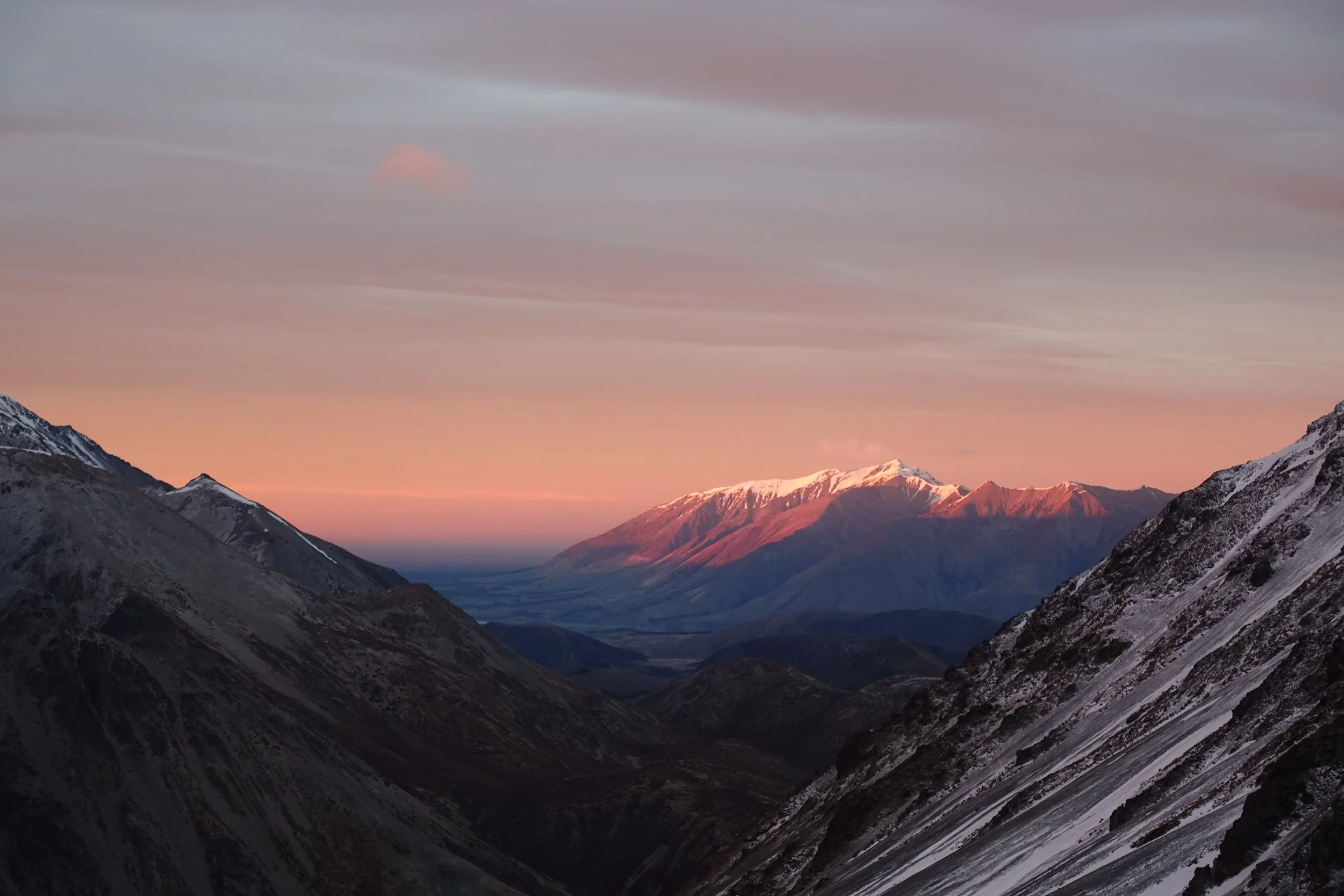
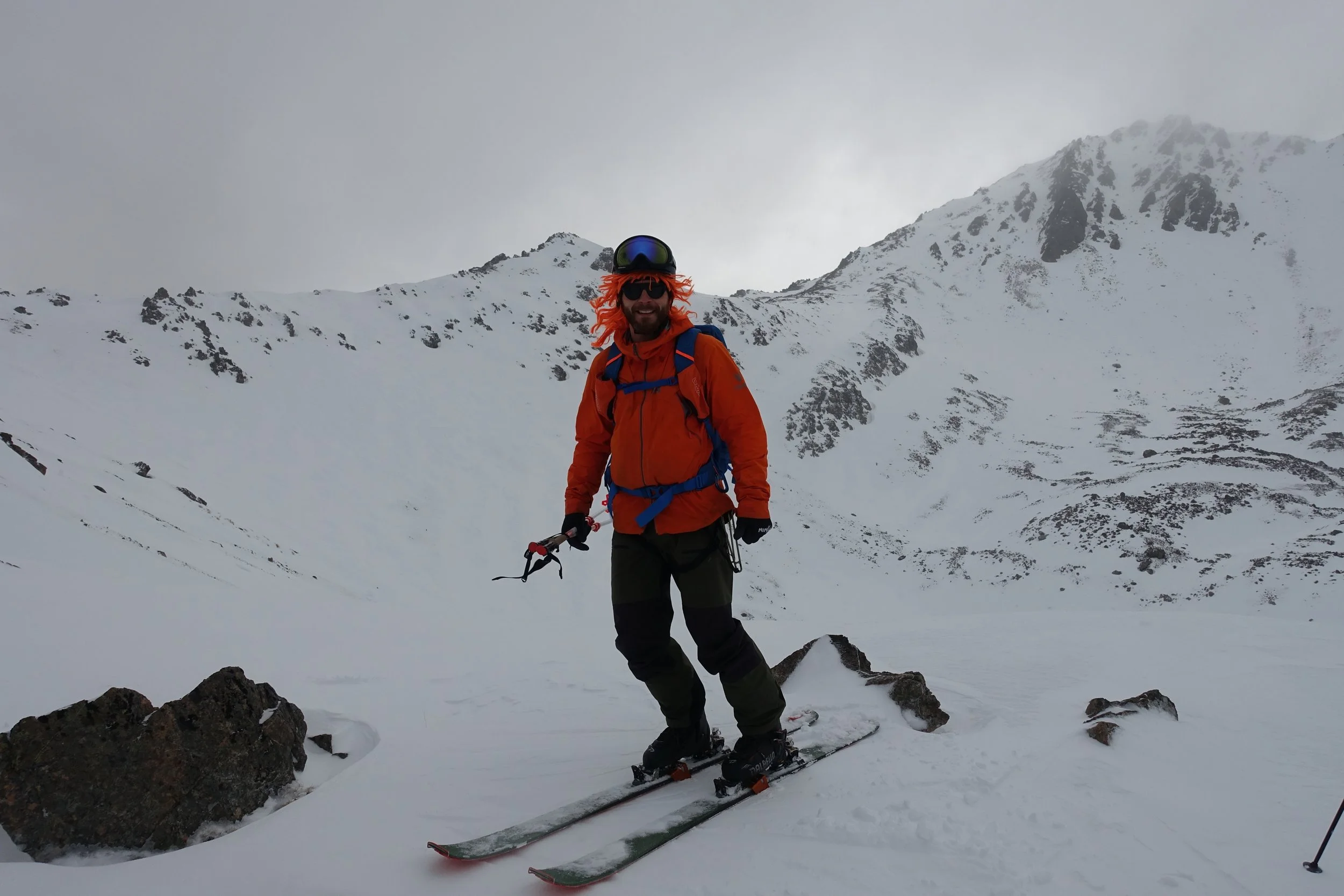
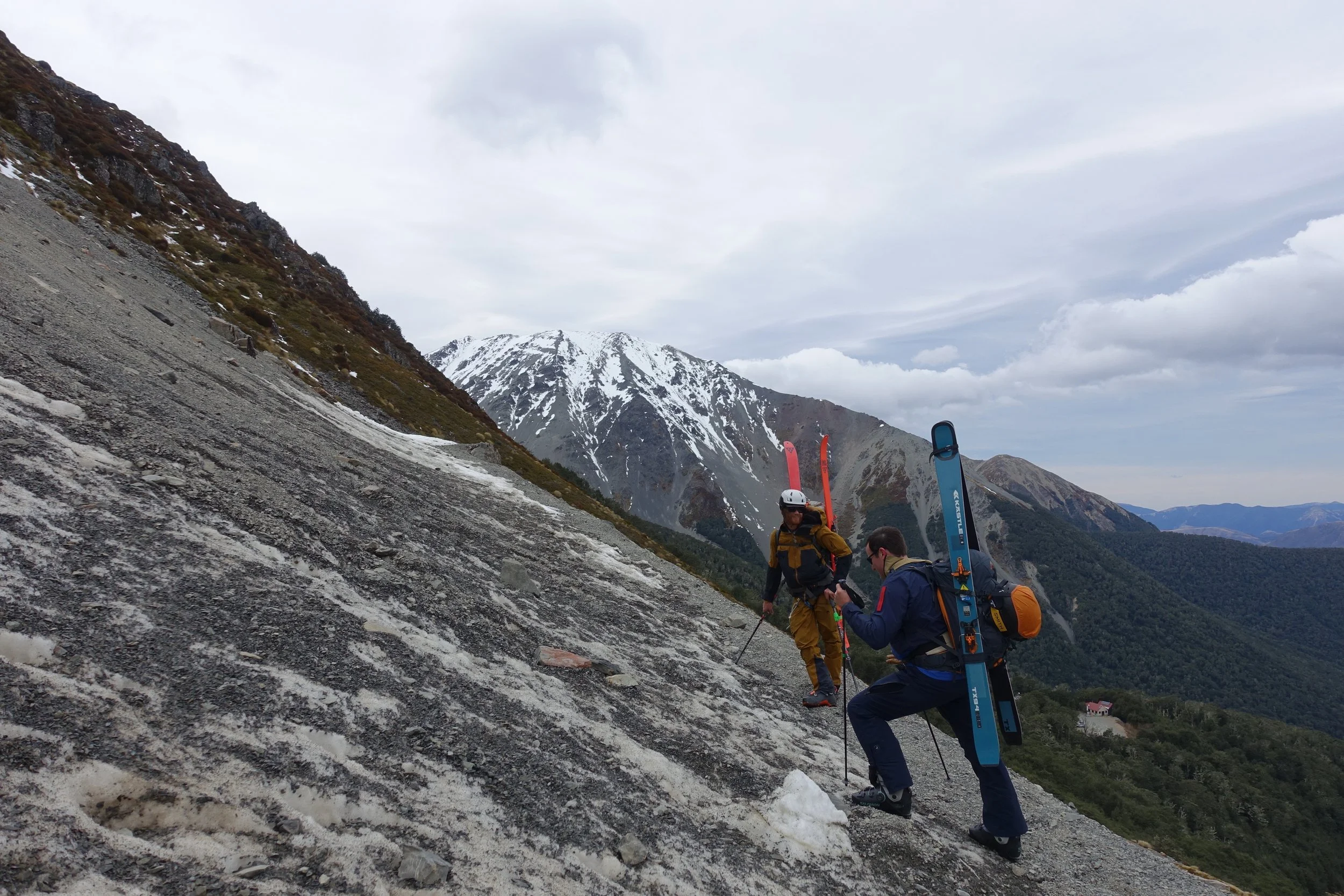
We took a walk up and got battered by wind, some gusts 70+ kph, so turned around.
Went for a hike then lift to Broken River. Got the Tyndall Tramway up to our accom at Lyndon Lodge.
The forecast for the next day was much the same, strong winds. Plus some rain. Rain was kind of going to do us a favour in softening up the hard icy snow patches. But the wind is very hard to work with.
We managed a short day touring around Tarn Basin finding a few nice patches of snow to make some turns on. Three runs in the basin and then headed to Cockayne Mountain.
El Niño causing havoc with weather all winter.
The El Nino weather pattern that is currently present is being described as a Super El Nino, with extremes in sea temperatures causing particularly strong winds and high rainfall.
As we left Cheeseman they closed the ski field. That’s everyone done for winter.
We hadn’t seen any high pressure system on the weather report for some time, and none on their way, either.
So we drove around to Mt Olympus from Cheeseman. Drove up the access road which was an interesting journey! Then the weather closed in and it started snowing. Headed out for a 2 hour ski and learnt to ride a nut cracker rope tow. Interesting experience. Not exactly relaxing! Quite icy but some small softer patches.
Mt Olympus is accessed from the opposite side of the range to all the other ski areas (which come off State Highway 73). It’s doable as a day trip from Castle Hill Village but it’s also quite close to Methven if you’re staying there.
The forecast read that 20cm of snow would fall overnight, so tomorrow could work out nicely.
Didn’t materialise. A couple of cm did though. Took the tow up and skinned into back bowl. One nice-ish run. Then back for a couple of ski field runs. Then lunch and a beer in the schnapps hut, then headed back to Christchurch.
Another trip where we didn’t score ideal weather or good snow. But boy did I get to visit some special places. Mount Olympus in particular has an extremely special vibe and left an impression on me as soon as I arrived.
Group photos
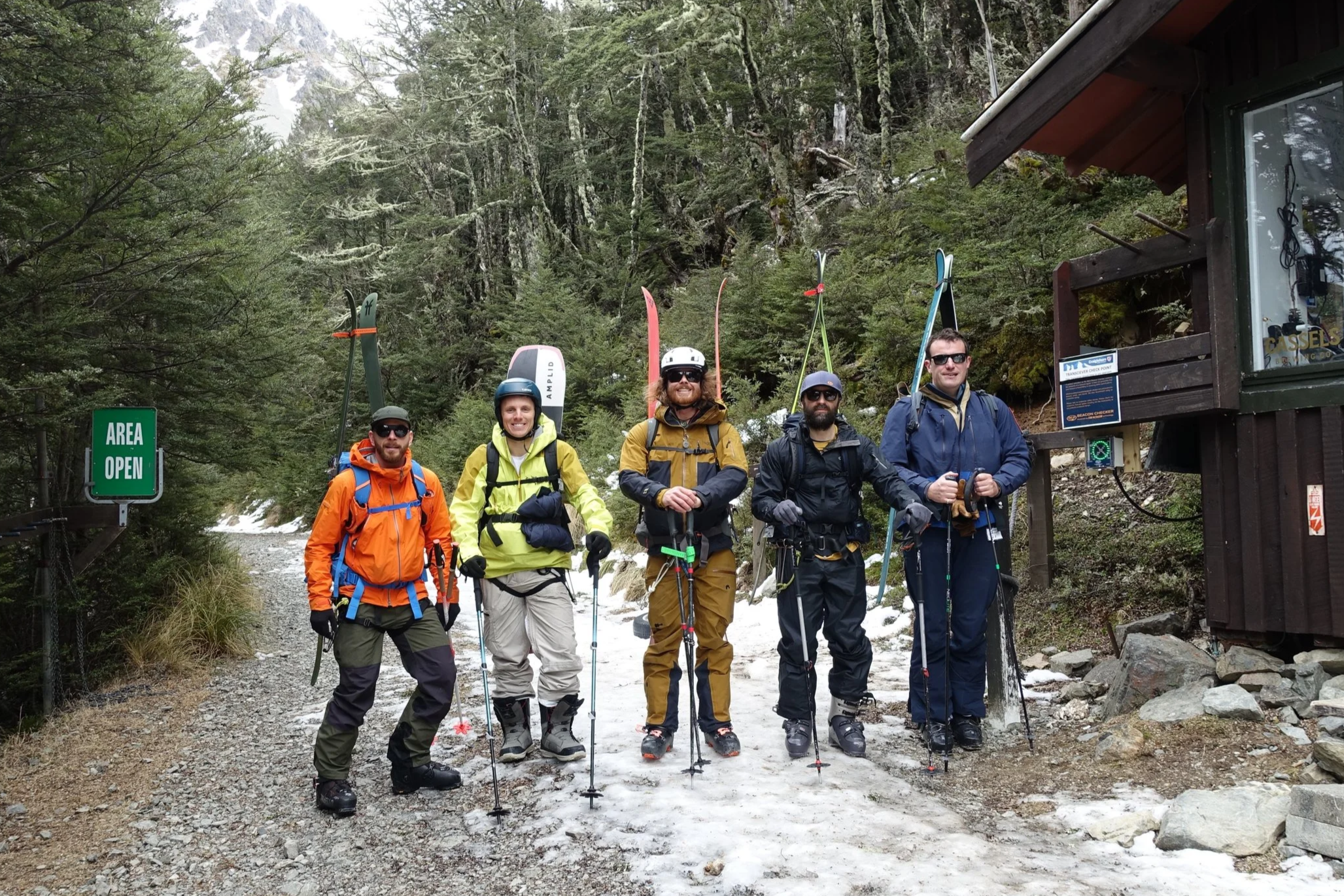
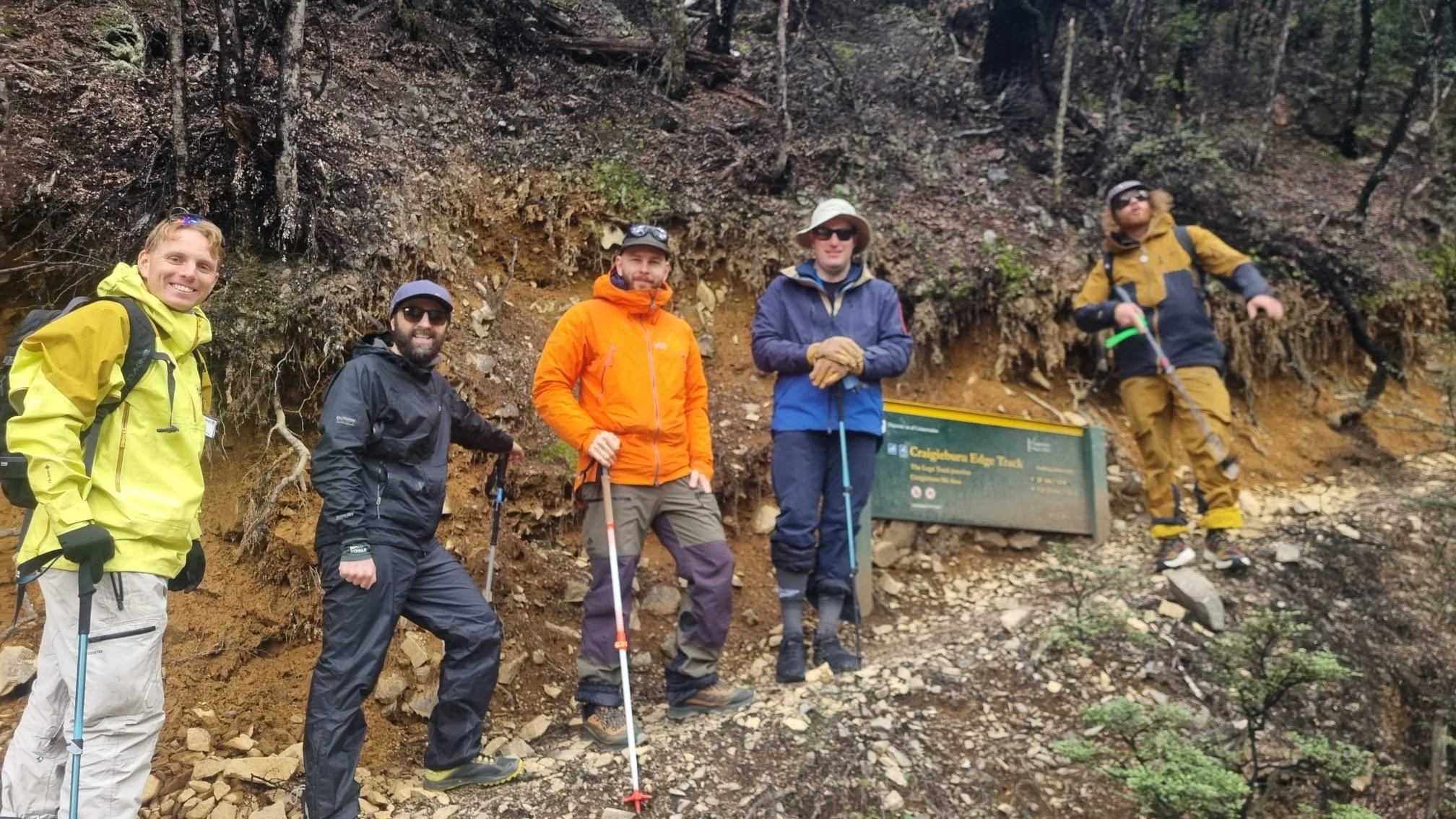
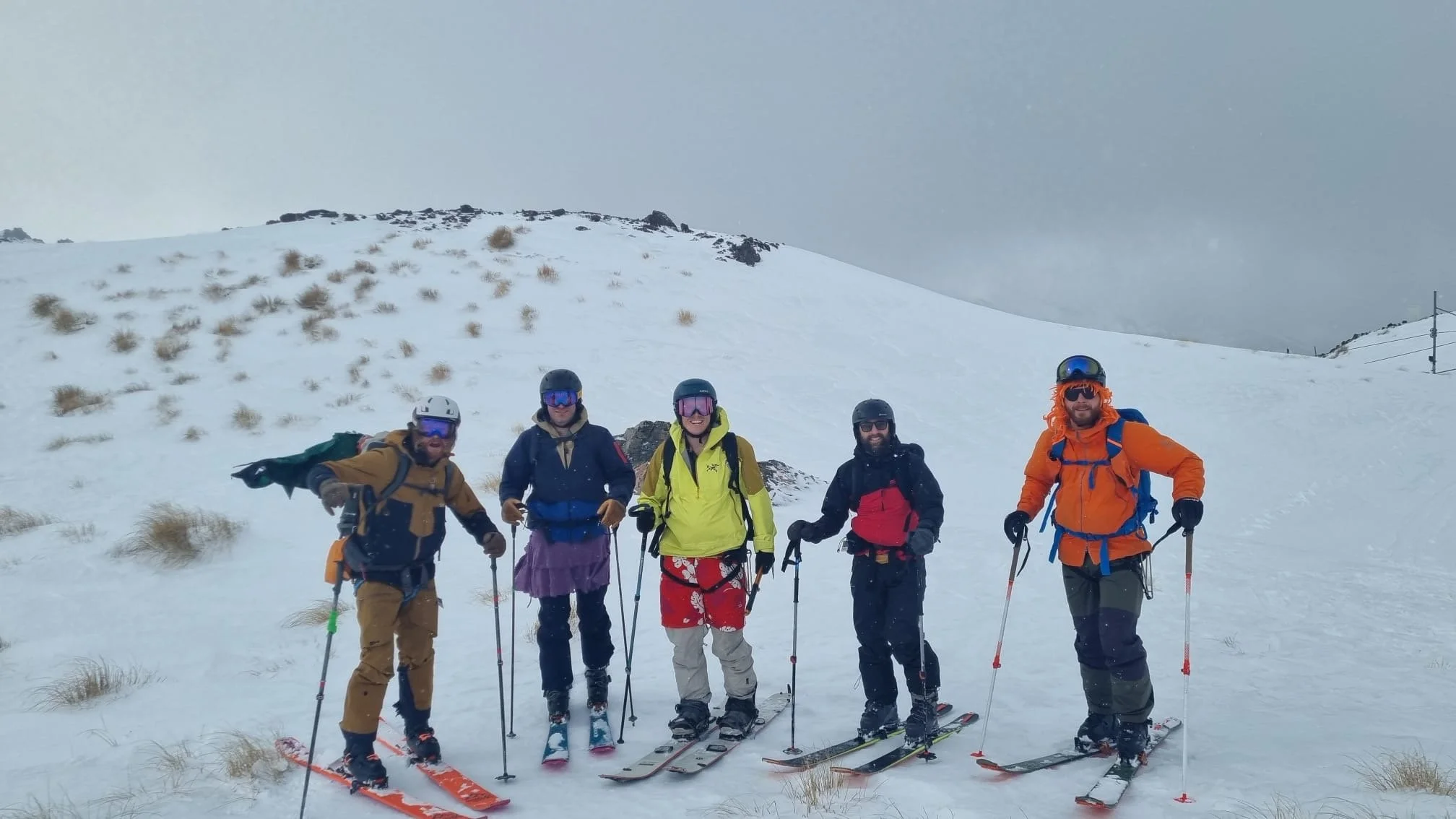
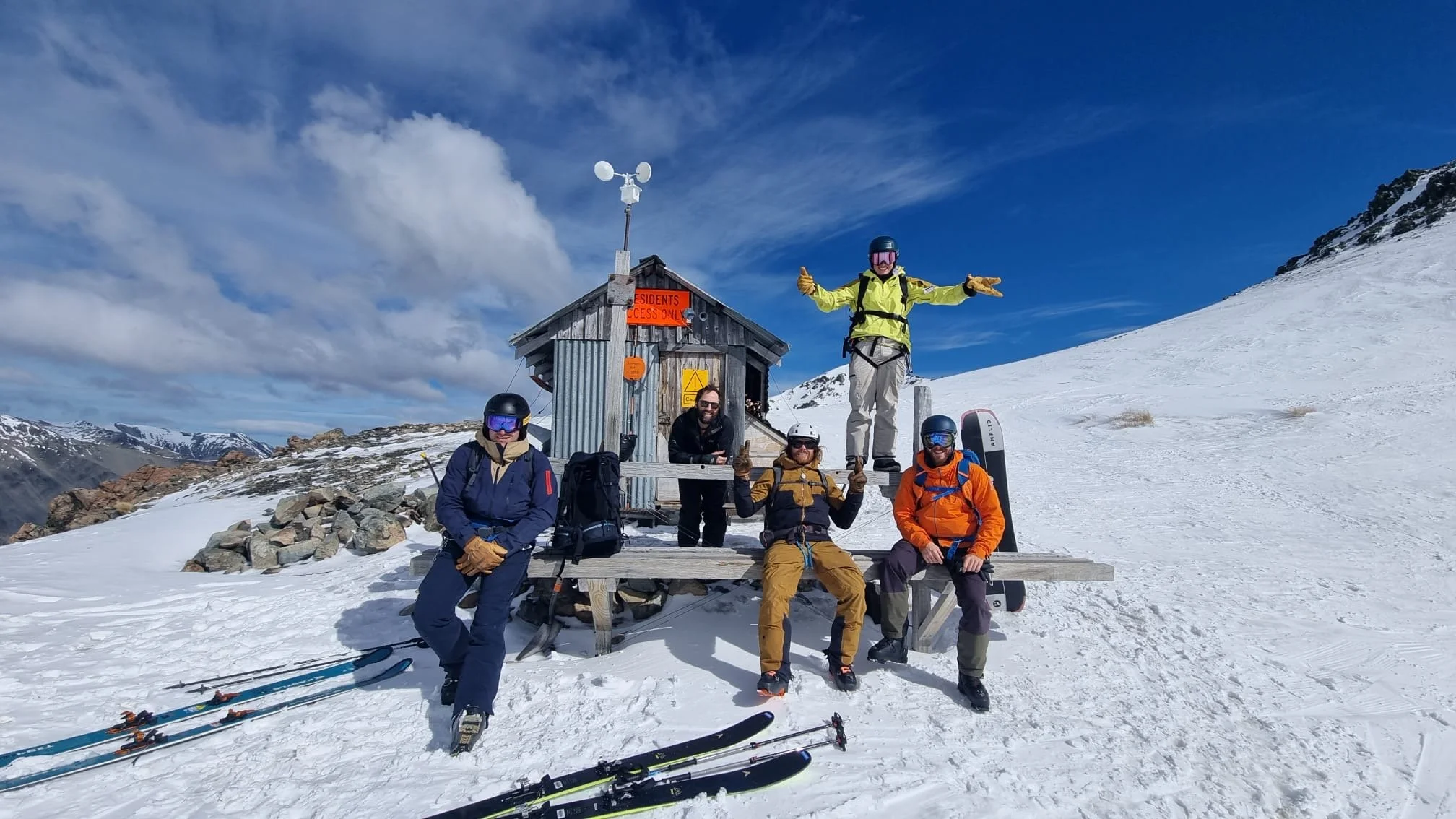
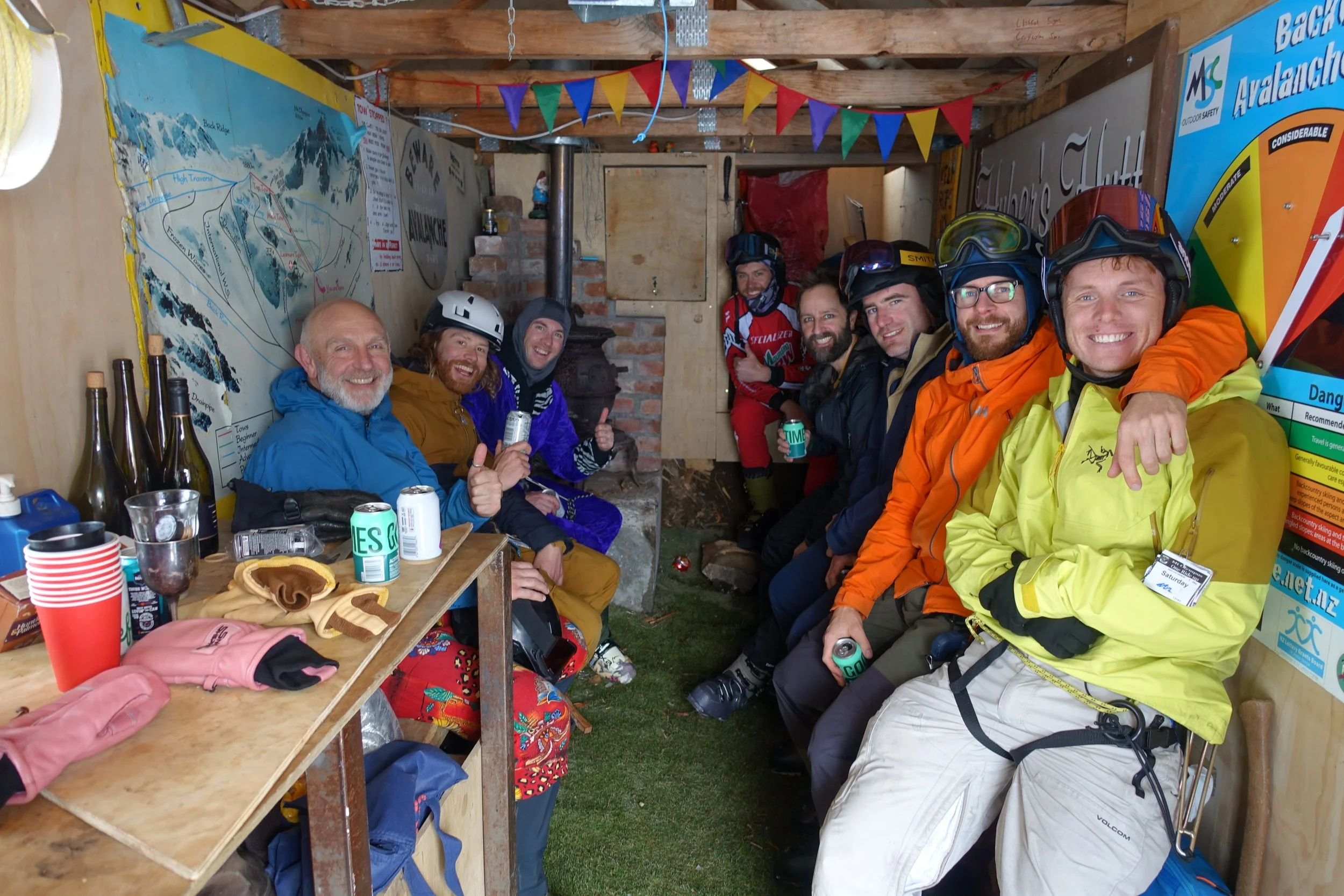
I haven’t had amazing snow or lots of runs. But boy have I been to some cool places and seen some cool things. The photos here will stay in my memory for a long time and for sure I will be back!
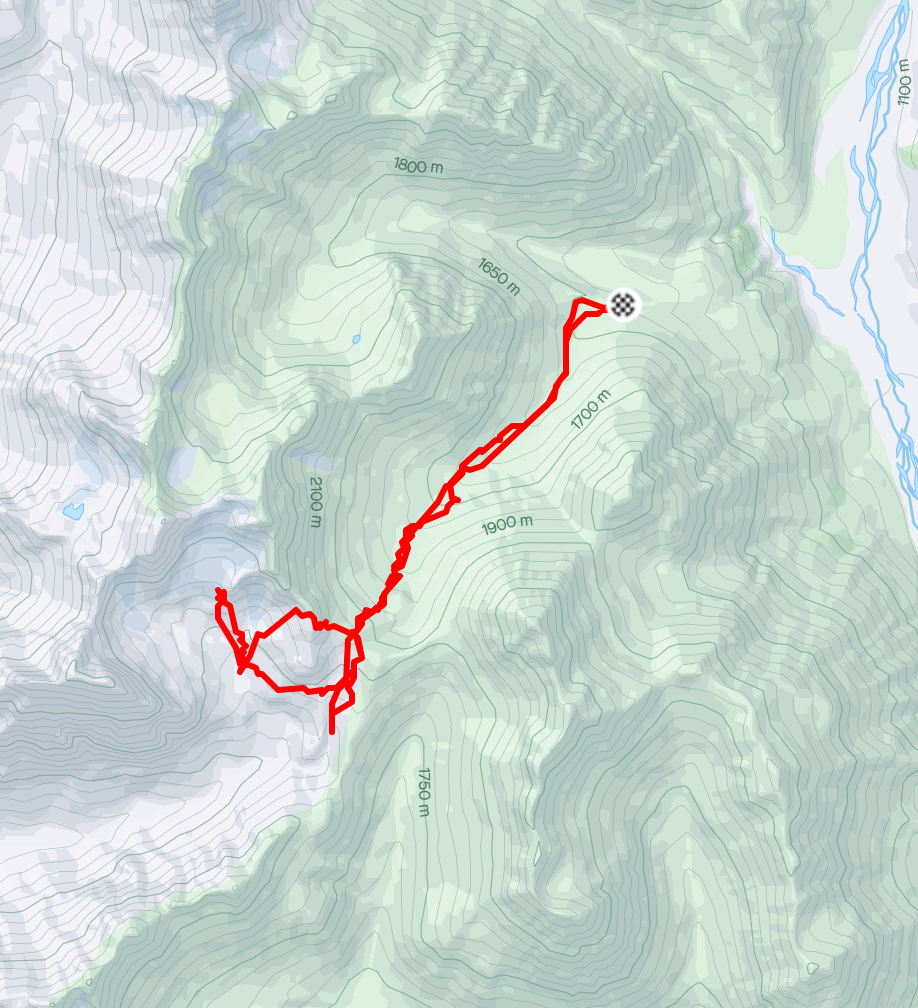
Tracks
Further info
See more at: skitouring.co.nz, doc.govt.nz, glenmorestation.co.nz, craigieburn.co.nz.
Useful links: Dave Searle’s Dream Lines on the Sky Piercer: Skiing in New Zealand, Ross Hewitt’s New Zealand 2024:Part I, Darwin and Silberhorn, Part II – Syme Ridge of Mt Tasman, Part III – Riding the Dragon’s Back, Sam Smoothy’s XXIV.
Short films: SOUTHERN ALPS, A Story from Aotearoa, Nutcracker, The Sky Piercer, See You At The Bottom, WEST OF WANAKA, The Great Alpine Highway 73, Terra Incognita, FADING LINES, Skiing New Zealand: the Syme Ridge, and the Central Rib on Elie, FICKLE BUSINESS, Pedals To Powder, This Side of Silence.
Related reading:
- Backcountry Ski-Touring in New Zealand, Shane Orchard
- The Story of New Zealand Freeskiing, Sam Masters
- What Could Possibly Go Wrong?, Mark Sedon
- Ski Touring: A Practical Manual, Bruce Goodlad
- Ski Rando: World Ski Touring Guide, Ski Rando Magazine
- Powder, The Greatest Ski Runs on the Planet, Patrick Thorne
- Free Skiing - How to Adapt to the Mountain, Jimmy Odén
- The Art of Shralpinism: Lessons from the Mountains, Jeremy Jones
Continue exploring



Bike
1 Mar 2024